
Views: 135 Author: Site Editor Publish Time: 2026-08-17 Origin: Site


Excessive slag and dross accumulation drains profitability from metal fabrication shops through hidden labor costs. When operators spend hours grinding, chipping, and repairing edges before parts can move to welding, production bottlenecks multiply. Poor cut quality is not just an aesthetic defect; it is a direct symptom of uncontrolled thermal dynamics, degraded equipment, or incorrect operator parameters. Many on the shop floor confuse plasma dross, which is driven by arc voltage and swirling gas dynamics, with slag from gas cutting. In oxy-fuel processes, slag is dictated by chemical exothermic oxidation and the precise dynamics of a laminar oxygen jet. When that jet is disrupted, heavy dross is inevitable. Eliminating these defects requires a systematic audit of the cutting environment. By moving away from reactive mechanical cleanup and shifting focus toward the proactive control of travel speed, gas pressures, flame chemistry, and consumable integrity, operations can achieve clean, weld-ready edges directly off the table.
Speed and Thermal Dynamics: Both excessive and insufficient travel speeds disrupt the oxygen stream's ability to clear molten material, resulting in distinct types of high-speed and low-speed dross.
Laminar Flow is King: A compromised cutting nozzle alters the geometry of the oxygen jet, destroying the laminar flow required to cleanly expel oxidized metal.
Flame Chemistry Matters: Inadequate preheat flame adjustment (failing to achieve a true neutral flame) acts similarly to low amperage in plasma cutting, leading to incomplete oxidation and heavy slag.
Parameter Calibration: Optimal gas cutting requires precise alignment of oxygen purity, preheat flame intensity, and standoff distance based on specific material thickness.
Equipment ROI: Investing in OEM or high-tier aftermarket cutting torches and nozzles yields a measurable reduction in secondary processing costs, outweighing the initial purchase premium.
To troubleshoot cut quality, operators must first understand the physical difference between slag and dross. While often used interchangeably on the shop floor, they represent different thermal reactions. Slag is the highly oxidized metal created during the exothermic reaction. It is the chemical byproduct of iron rapidly oxidizing. Dross, however, is resolidified molten metal that failed to oxidize completely and has adhered to the bottom or top edge of the cut. Dross is mechanical; slag is chemical. Both indicate a breakdown in the cutting process. When you look at a freshly cut steel plate, the type of residue left behind tells a distinct story about what went wrong during the cut.
The entire oxy-fuel cutting process relies on a rapid exothermic reaction. The preheat flame brings the steel up to its kindling temperature—approximately 1,600°F (870°C), at which point the steel turns a bright cherry red. Once this temperature is reached, a high-pressure stream of pure oxygen is introduced. This oxygen jet rapidly oxidizes the heated steel, generating massive amounts of additional heat that sustains the cut. The physical force of the oxygen stream then blows the liquid iron oxide (slag) out through the bottom of the kerf. Any disruption in oxygen purity, pressure, or stream geometry leads to incomplete expulsion, causing the molten material to cling to the plate. If the oxygen purity drops even slightly, the reaction slows down, the heat drops, and the slag thickens.
A successful oxy-fuel cut demands absolute laminar flow from the oxygen jet. Laminar flow means the gas travels in parallel layers with no disruption or lateral mixing. This tight, cylindrical stream maintains its velocity and shape deep into the cut, pushing the slag straight down. Contrast this with plasma cutting, which relies on swirling gas dynamics to constrict the arc. If the oxygen stream in an oxy-fuel setup begins to swirl or diverge due to a dirty or damaged orifice, the gas loses its downward velocity. Turbulence in the stream causes the oxygen to wash against the sides of the kerf, making a clean, dross-free cut physically impossible. The stream must act like a solid rod of air punching through the steel.
Before adjusting parameters, establish the baseline expectations for an optimal cut. A properly executed cut will feature sharp, square top edges without melting or rounding. The cut face should be smooth, with vertical or slightly trailing drag lines that are faint and uniform. Most importantly, the bottom edge should be completely free of dross, or have a very light, brittle slag that flakes off easily with a simple scrape of a wire brush or chipping hammer. If an operator has to pick up a heavy grinder to clean the bottom edge, the parameters are wrong.
Travel speed is arguably the most critical variable controlled by the operator or CNC machine. Moving too slowly or too quickly produces entirely different types of defects. Finding the sweet spot requires observing the drag lines on the cut face and the behavior of the slag exiting the bottom of the kerf.
When the travel speed is too slow, the preheat flame inputs excessive thermal energy into the plate. The kerf widens, and the top edge begins to melt and roll over. Because the oxygen stream is consuming the metal slower than the heat is spreading, the molten material pools. This creates heavy, dark, globular dross on the bottom edge. Low-speed dross is notoriously thick, deeply welded to the base metal, and requires aggressive grinding to remove. You will often see the slag bubbling and boiling at the bottom of the cut rather than shooting straight down.
Conversely, moving too quickly causes the oxygen stream to lag behind the torch travel direction. The drag lines on the cut face will angle sharply backward. Because the stream lacks the time to fully penetrate and clear the kerf, the molten slag is directed back up into the cut. This leaves a hard, tenacious, continuous bead of dross along the bottom edge. High-speed dross is often very difficult to chip off because it consists of unoxidized steel that has fused directly back onto the plate. The sparks exiting the bottom of the plate will trail significantly behind the torch head.
In oxy-fuel cutting, the preheat flame acts as the thermal foundation. Setting an incorrect fuel-to-oxygen ratio destroys cut quality. A heavily carburizing flame (too much fuel) or a weak oxidizing flame fails to maintain the steel at its 1,600°F ignition temperature consistently. If the thermal energy drops below this threshold, the chemical reaction stalls. The steel melts rather than oxidizes, leaving un-oxidized molten steel to weld itself firmly to the bottom of the plate. Achieving a crisp, neutral flame—characterized by distinct, bright blue inner cones—is non-negotiable for clean cuts. Operators must adjust the valves until the feathery edge of the fuel gas just disappears into the inner cone.
The distance between the tip of the torch and the workpiece dictates how the preheat flame and oxygen stream interact with the metal. Maintaining a consistent height is critical for edge squareness and slag removal.
Torch Too Close: Positioning the torch too close to the plate causes the inner cones of the preheat flame to bury into the kerf. This results in severe top-edge melting, rounded corners, and a wider kerf. It can also cause the torch to pop or backfire as slag splashes back into the tip.
Torch Too Far: Excessive standoff distance allows the preheat flame to disperse, losing its concentrated heat. More critically, the cutting oxygen stream loses velocity and expands before it enters the kerf. This loss of kinetic energy means the stream cannot effectively push the slag out the bottom, resulting in heavy dross accumulation.
Manual torch height control over uneven or warped plates is a common challenge. As the distance fluctuates, the preheat zone destabilizes, leading to inconsistent cut quality across the length of the plate. Using a torch guide or a machine carriage with automatic height control can eliminate this variable.
The exothermic reaction is highly sensitive to oxygen purity. A drop in oxygen purity by just 1% can decrease cutting speed by 10% and significantly increase oxygen consumption. Lower purity slows down the reaction speed, meaning the slag stays molten longer and clings to the plate. Similarly, incorrect cutting oxygen pressure ruins the cut. Too much pressure creates a turbulent stream that gouges the cut face; too little pressure fails to clear the kerf. Always set gas pressures according to the manufacturer's thickness charts, measuring the pressure at the torch while the oxygen valve is flowing.
Defect Type | Visual Characteristics | Primary Causes | Corrective Action |
|---|---|---|---|
Low-Speed Dross | Thick, bubbly, globular, heavily welded to the bottom edge. Top edge rounded. | Travel speed too slow; excessive preheat. | Increase travel speed; reduce preheat flame intensity. |
High-Speed Dross | Hard, thin, continuous bead. Drag lines angle sharply backward. | Travel speed too fast; insufficient oxygen pressure. | Decrease travel speed; verify cutting oxygen pressure. |
Top Edge Melting | Top edge is rounded off, melted, with heavy slag on the top surface. | Standoff distance too close; preheat flame too hot. | Increase standoff distance; adjust to a neutral flame. |
Gouged Cut Face | Deep, irregular grooves on the cut surface. Loss of cut. | Dirty nozzle orifice; excessive oxygen pressure. | Clean or replace nozzle; reduce oxygen pressure to spec. |
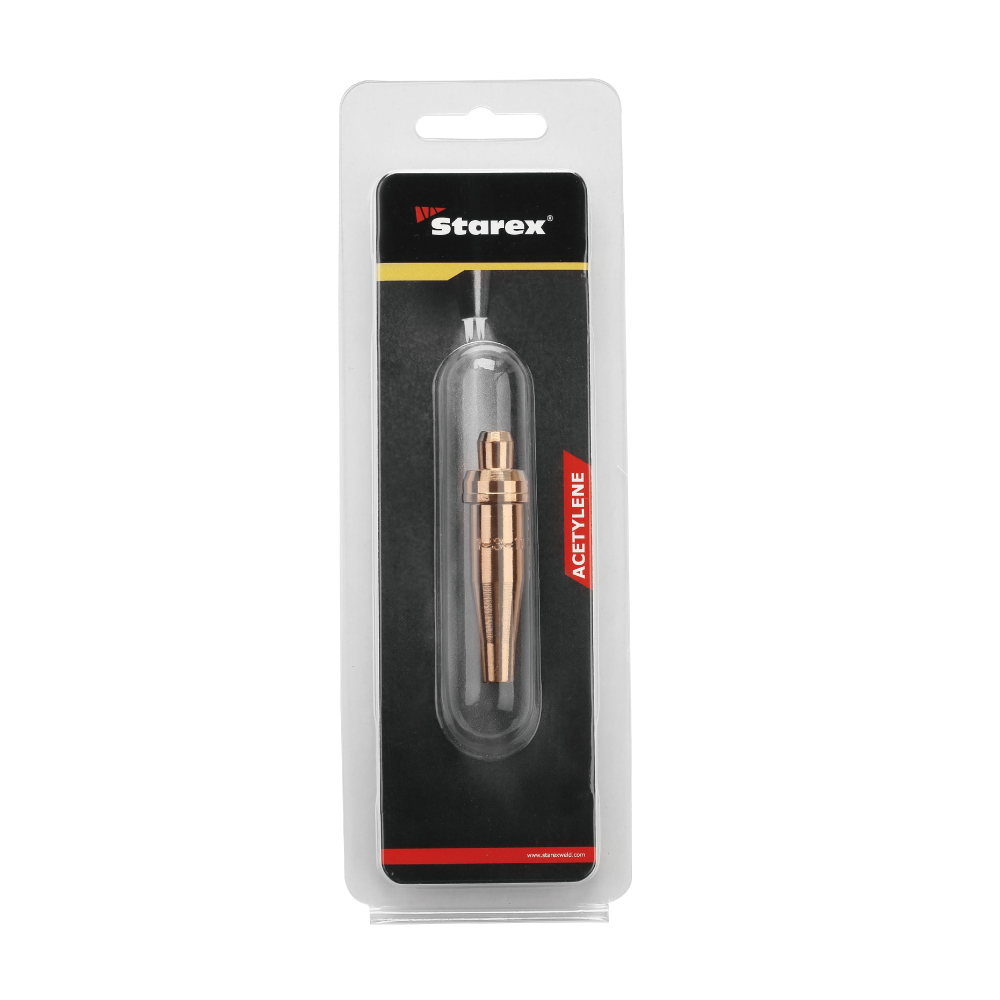
The condition of the cutting nozzle dictates the shape and velocity of the oxygen stream. Over time, nozzles suffer from thermal degradation and physical abuse. Physical signs of a failing nozzle include bell-mouthing (where the central oxygen orifice becomes flared), spatter buildup on the face, blocked preheat orifices, or internal carbon tracking. When the central orifice loses its perfectly cylindrical shape, the oxygen stream distorts. It transforms from a high-velocity laminar jet into a turbulent, divergent spray. Once this happens, dross becomes inevitable, regardless of how perfectly the travel speed and gas pressures are dialed in. Inspecting the tip face daily is a mandatory practice for serious fabricators.
Maintaining the internal geometry of the nozzle is critical. Operators must use specialized tip cleaners sized correctly for the specific orifices. The cleaning motion should be straight in and out, never twisted aggressively. Using welding wire, drill bits, or makeshift tools permanently scratches the soft copper or brass interior. Even a microscopic scratch inside the oxygen bore will create turbulence in the gas stream, ruining the cut quality. If a nozzle cannot be cleaned with proper tip cleaners, it must be discarded. Trying to save a few dollars by running a damaged tip will cost hundreds in grinding labor.
The torch body itself plays a massive role in cut quality. A compromised cutting torch will fail to mix gases properly or maintain consistent pressure. Operators should regularly audit the torch for internal leaks, damaged seating surfaces where the nozzle mates to the head, and faulty needle valves. If the needle valves are worn, the preheat flame will fluctuate during the cut, shifting from neutral to oxidizing or carburizing. Damaged seating surfaces allow high-pressure cutting oxygen to leak into the preheat gas passages, causing erratic flames and dangerous backfires. A torch that pops constantly needs immediate maintenance.
Procurement departments often focus on the upfront cost of consumables, but a cost-to-outcome analysis reveals a different reality. Budget consumables often suffer from poor machining tolerances. If the central oxygen bore is off-center by even a fraction of a millimeter, the gas stream will deflect. Premium, precision-machined nozzles maintain exact concentricity and tight tolerances. This ensures consistent gas velocity and perfect laminar flow. The reduction in post-weld cleanup labor and abrasive disc consumption achieved by using high-performance nozzles heavily outweighs the initial purchase premium. You are paying for the precision of the gas stream, not just a piece of copper.
Thermal saturation is a wild card in metal fabrication. When cutting micro-parts, tight radiuses, or complex artsy shapes, the heat from the preheat flame has very little base metal to dissipate into. The entire part quickly reaches critical temperatures. Once the part is thermally saturated, the cutting oxygen stream tends to melt the surrounding metal rather than cleanly oxidizing the kerf, resulting in massive dross accumulation. Tactical solutions to mitigate heat buildup include altering cut paths to distribute heat, utilizing chain cutting techniques, optimizing nested designs to leave larger heat sinks, or programming cooling intervals between pierces. Managing the heat input is just as important as managing the oxygen stream.
The condition of the steel surface drastically impacts the exothermic reaction. Heavy mill scale, thick rust, primer, protective coatings, or surface moisture act as thermal barriers. They disrupt the preheat phase, requiring more time and heat to reach the ignition temperature. As the cut progresses, these contaminants can pop and deflect the cutting oxygen stream. Furthermore, rust and paint introduce impurities into the molten slag. This alters the slag chemistry, often making it much harder and more adhesive, transforming an easily removable slag into stubborn dross. Clean steel cuts significantly better than dirty steel.
Operators face a trade-off when dealing with dirty material. Pre-cleaning the cut lines with a grinder removes the contaminants and ensures a perfect cut, but adds upfront labor costs. Conversely, cutting straight through heavy rust saves prep time but increases the risk of spatter blowing back and destroying the cutting nozzle. Operations must weigh the labor cost of pre-cleaning against the cost of replacing consumables damaged by contaminated surfaces and the subsequent grinding required to remove the resulting dross. In most heavy industrial settings, a quick pass with a wire wheel along the cut line pays off.
When excessive slag and dross appear, operators should avoid randomly adjusting dials. Follow a logical, sequential troubleshooting framework to isolate the variable causing the defect:
Verify material thickness and grade: Ensure the nozzle size matches the plate thickness according to the manufacturer's chart.
Inspect gas delivery systems: Check regulators for pressure creep, inspect hoses for leaks, and verify bulk gas purity.
Audit the cutting nozzle: Remove the nozzle, inspect the seating surfaces, and check the orifices for bell-mouthing or spatter. Clean or replace as necessary.
Set and verify the preheat flame: Ignite the torch and adjust the valves to achieve a crisp, neutral flame with distinct inner cones.
Adjust cutting oxygen pressure: Depress the cutting oxygen lever and set the regulator pressure while the gas is flowing to account for pressure drop in the lines.
Fine-tune travel speed and standoff: Perform a test cut. Adjust travel speed until drag lines are nearly vertical, and maintain a consistent standoff distance.
Equipment does not last forever, but not every issue requires a total replacement. Establish clear criteria for maintenance. A torch can often be rebuilt if the issues are limited to worn O-rings, sticky valves, or minor carbon buildup. Rebuild kits can restore valve function and eliminate minor leaks. However, if the internal seating surfaces in the torch head are scored, pitted, or warped from a severe flashback, rebuilding will not solve the problem. High-pressure oxygen will continue to bypass the seats. In these cases, a complete replacement is required to safely restore cut quality.
Relying on operator guesswork leads to inconsistent quality across shifts. Facilities must standardize cutting parameters by posting manufacturer cut charts directly at the workstations. Standardizing consumable procurement ensures that operators are always working with identical, high-tolerance parts. By removing the guesswork and establishing strict compliance with operating parameters, a facility can scale its cutting operations while maintaining tight quality control and minimizing secondary processing. Consistency in setup equals consistency in output.
Excessive slag and dross are not inherent, unavoidable flaws of the oxy-fuel process. They are clear indicators of misaligned parameters, incorrect flame chemistry, or degraded equipment. By understanding the thermal dynamics of the exothermic reaction and the fluid dynamics of the oxygen jet, operators can diagnose defects based on their visual characteristics. When evaluating new equipment or troubleshooting existing setups, prioritize precision. The shortlisting logic for equipment upgrades should focus on the precision machining of the nozzle orifices, reliable gas mixing capabilities within the torch body, and the availability of accurate, tested parameter charts from the manufacturer.
Conduct a visual inspection of all current consumables, discarding any nozzles with scratched bores or bell-mouthed orifices.
Audit your dynamic gas pressures at the regulator while the oxygen lever is depressed, ensuring they match OEM specifications for your plate thickness.
Implement a strict maintenance schedule for cleaning tips using only properly sized, smooth-file tip cleaners.
Consult with your equipment supplier to trial high-tolerance replacement parts if current consumables are yielding inconsistent results.
A: Low-speed dross occurs when moving too slowly, causing the preheat flame to over-melt the kerf. It results in thick, globular dross that is heavily welded to the bottom edge. High-speed dross happens when moving too quickly; the oxygen stream lags and pushes molten metal back up, leaving a hard, thin, continuous bead along the bottom.
A: A neutral flame has a perfect balance of fuel and oxygen, producing a crisp blue inner cone that optimally heats the steel to 1,600°F. A carburizing flame has excess fuel, while an oxidizing flame has excess oxygen. Both fail to heat the metal efficiently, causing incomplete oxidation and heavy slag accumulation.
A: Replacement frequency depends on usage and care. You should replace the nozzle immediately if you observe bell-mouthing on the central orifice, deep scratches inside the bore, heavy spatter that cannot be removed, or if the oxygen stream visibly diverges and loses its straight, laminar shape.
A: Yes. Too much oxygen pressure creates a turbulent stream that gouges the cut face and fails to clear the kerf cleanly. Too little pressure lacks the kinetic energy to push the molten slag out the bottom of the plate, resulting in heavy dross accumulation.
A: Dross is harder to remove when it consists of unoxidized molten steel that has resolidified and fused to the base metal, often due to moving too fast or lacking oxygen pressure. Surface contaminants like rust or primer can also alter the slag chemistry, making it more adhesive and difficult to chip away.
A: If the torch is too close, the preheat flame melts the top edge of the cut. If it is too far, the cutting oxygen stream loses velocity and expands before entering the kerf. This loss of kinetic energy prevents the stream from blowing the slag out the bottom, resulting in heavy dross.
A: Always use specialized, correctly sized tip cleaners provided by the manufacturer. Insert the cleaner straight in and pull it straight out without aggressive twisting. Never use drill bits, welding wire, or makeshift tools, as these will permanently scratch the soft interior brass or copper, ruining the gas flow.