
Views: 0 Author: Site Editor Publish Time: 2026-09-09 Origin: Site


Struggling through half-inch steel plate only to be left with jagged edges and a mountain of dross? We have all been there on the shop floor. An underpowered tool does not just create excessive slag; it eats up your billable hours in the grinding bay. Whether you are patching a rusted truck frame or fabricating heavy structural supports, matching your equipment to your daily workload is the foundational step toward professional, repeatable results.
When evaluating metal fabrication setups, the cutting head is just as critical as the power source itself. The 60-amp class has emerged as a highly standardized and reliable baseline in the industry. It offers a precise balance of thermal power, dimensional accuracy, and portability. In this technical guide, you will learn exactly what this system can handle, how the internal geometry affects your cut quality, and how to determine if it is the right investment for your specific fabrication needs.
Before diving into the internal mechanics, it helps to understand the baseline capabilities of a standard 60-amp system. The table below outlines the primary operational metrics and practical shop benefits of this specific architecture.
Feature / Metric | Standard Capability | Practical Benefit |
|---|---|---|
Optimal Cut Thickness | 1/2" to 5/8" (12-16mm) | Ideal for structural mild steel and standard fabrication without excessive post-weld grinding. |
Severance Thickness | Up to 7/8" (22mm) | Allows for rough demolition cuts on thicker materials when dimensional precision is secondary. |
Starting Technology | Non-HF Blowback | Safe for sensitive electronics, modern vehicle computers (ECUs), and automated CNC systems. |
Consumable Life | High (with dry air) | Efficient internal vortex design minimizes electrode hafnium wear during prolonged operation. |
Versatility | Moderate to Heavy | Bridges the gap between thin sheet metal repair and heavy industrial plate cutting. |
Understanding the internal engineering of your equipment helps explain why it performs consistently across demanding environments. The fabrication industry has largely embraced this specific design for a few critical operational reasons.
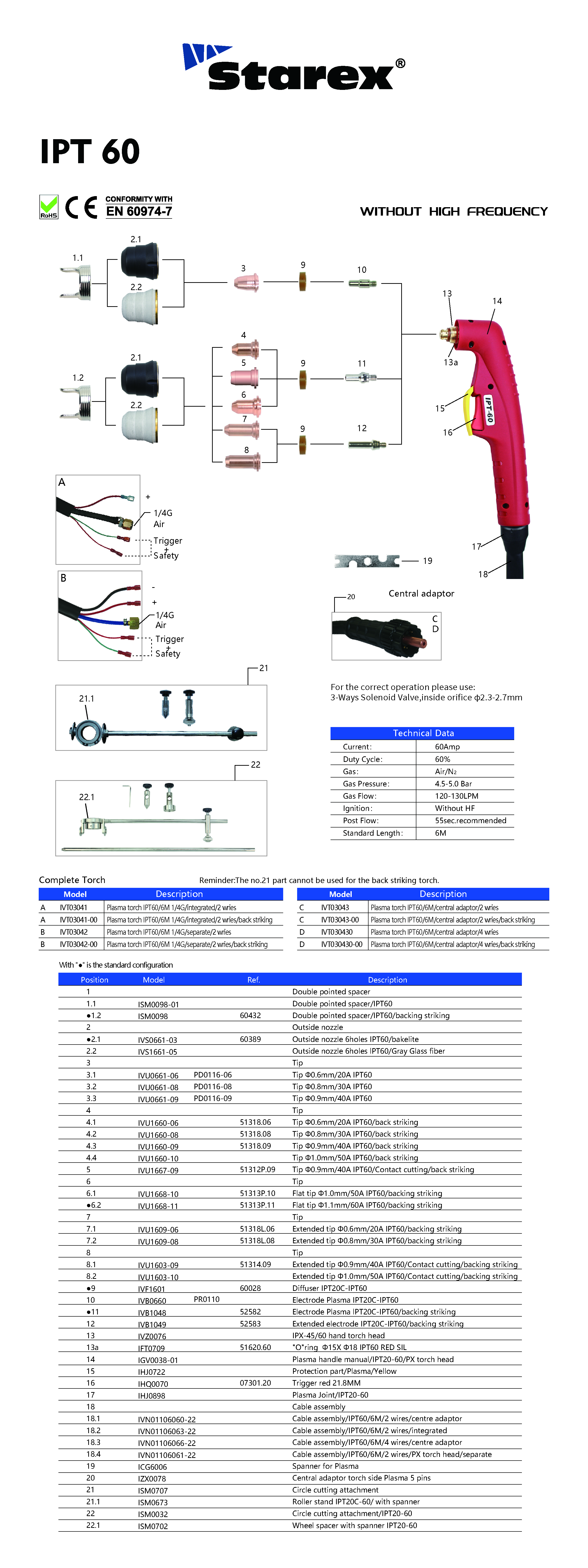
The standard European-style architecture is known for its durable internal geometry and ergonomic exterior. Unlike older, bulkier designs, a high-quality IPT 60 plasma torch is engineered specifically to reduce operator wrist fatigue during long, grueling cutting sessions. The handle is typically constructed from high-impact, heat-resistant polymers. This material insulates the operator's hand while protecting the internal brass and tellurium copper fittings from extreme thermal damage.
Building on this durable foundation, the trigger mechanism incorporates a reliable safety lock to prevent accidental arc initiation—an absolute necessity when maneuvering around a crowded, noisy shop floor. Internally, a precision gas distributor ensures that compressed air flows evenly around the electrode. This creates a tight, swirling vortex, which is critical for maintaining a stable, focused plasma column. This exact internal engineering makes the unit highly resistant to the common failures seen in generic alternatives, such as melted retaining cups or chronically misaligned electrodes.
Perhaps the most significant technological advantage of this system is its non-high frequency (Non-HF) blowback starting mechanism. Older or entry-level models often rely on high-frequency voltage to jump the gap between the electrode and the nozzle to ignite the pilot arc. While effective for creating a spark, high-frequency starts generate severe electromagnetic interference (EMI). This invisible electrical noise can easily fry nearby laptops, sensitive medical devices, or the digital control boards of expensive machinery.
The blowback start completely eliminates this risk. Inside the head, the electrode is spring-loaded and rests directly against the nozzle. When you pull the trigger, a burst of air pressure forces the electrode backward. This physical break mechanically draws the electrical arc without needing a high-voltage spark. If you are operating a plasma cutter torch near modern vehicles packed with complex computers, or integrating it into a computerized cutting table, a blowback design is no longer just a luxury. It is a strict operational requirement.
Amperage dictates the core thermal capacity of your system. At 60 amps, you enter the realm of medium-to-heavy fabrication. The satisfying drop of a perfectly severed half-inch steel plate becomes a daily reality. However, cutting capacity varies significantly depending on the thermal properties of the metal being processed.
Mild steel serves as the baseline material for testing cutting equipment. A standard 60A setup excels in this category, often boasting a 60% duty cycle at maximum output. Operators can consistently achieve highly precise, clean cuts on mild steel ranging from 1/2 inch to 5/8 inch (12mm to 16mm) in thickness. A "clean cut" means the resulting edge requires almost zero post-weld grinding. The dross—that melted metal clinging to the bottom edge—easily chips off with a quick tap of a slag hammer.
When pushed to its absolute maximum limit, this setup can achieve severance cuts on mild steel up to 7/8 inch (22mm) under ideal conditions. A severance cut is a slow, rough process that leaves a jagged edge and heavy dross buildup. While highly useful for demolition or scrapping old machinery, it is not suitable for fabricating parts that require precise fitment.
Processing non-ferrous metals requires a slightly different approach. Aluminum and stainless steel possess vastly different thermal conductivity and melting points compared to carbon steel. Aluminum dissipates heat incredibly rapidly. When you slice into an aluminum diamond plate, the thermal energy is drawn away from the cut zone much faster than it would be in mild steel.
Because these metals dissipate heat so efficiently, the maximum clean cut thickness is generally reduced by about 20% to 30%. If you can cleanly slice 5/8" mild steel, expect your clean cut limit on aluminum to be closer to 1/2" or 3/8". Furthermore, cutting these materials often produces a tougher, more adhesive dross that requires a mechanical flapper wheel to remove. To combat this, slowing down your travel speed slightly ensures the arc fully penetrates these reflective, heat-dissipating alloys.
Looking closely at recent metal fabrication industry trends, there is a distinct and massive shift occurring. Many small to mid-sized shops are actively transitioning away from oversized, power-hungry 3-phase industrial systems and cumbersome oxy-fuel setups. Instead, there is a growing standardization around compact, high-efficiency 60-amp blowback units. This trend is largely driven by the explosion of affordable CNC tables. Fabricators need a tool that can process a diverse range of materials—from thin auto body panels to thick structural brackets—without requiring massive electrical infrastructure upgrades.
In automotive environments, mechanics encounter a wild mix of paper-thin, rusty sheet metal and thick structural chassis components. A 60-amp system is highly adaptable here. It can be dialed down to 30 amps to carefully cut out rusted floor pans without causing excessive heat warping to the surrounding thin metal.
Conversely, when you are crawling under a rig to build custom roll cages, modify truck frames, or fabricate heavy-duty suspension brackets, cranking it to the full 60 amps provides the necessary deep penetration. It is an invaluable asset for quickly slicing through seized exhaust bolts or stubbornly rusted leaf spring mounts, saving hours of frustrating labor.
For general fabrication shops, this amperage class is the undisputed primary workhorse. Building utility trailers, repairing heavy agricultural equipment, or fabricating structural I-beam supports requires cutting steel that consistently falls in the 3/8" to 5/8" range.
Attempting to use a lower amperage 40A tool for these tasks results in agonizingly slow travel speeds. The 60-amp output allows fabricators to maintain a steady, highly productive pace through thick plate steel. This ensures that project deadlines are met without compromising the structural integrity of the welded edges.
To determine if 60 amps is the correct financial investment, it is necessary to compare it against the other common amperage classes currently dominating the shop floor.
A 40A unit is excellent for precision work on thin materials. It is the go-to choice for HVAC technicians cutting ductwork or hobbyists working on intricate metal art. However, operators who purchase a 40A machine often outgrow it frustratingly fast. When tasked with cutting 1/2" steel, a 40A arc must move incredibly slowly. This sluggish pace transfers excess heat into the surrounding metal, causing severe warping and a massive buildup of rock-hard dross.
As the industry data suggests, the 60A class is the ultimate middle ground. It offers enough raw thermal power to handle 90% of the tasks a standard fabrication shop will encounter. Specifically, a 60A plasma cutting torch typically operates efficiently on standard single-phase 220V power. This makes it highly accessible for well-equipped home garages and commercial shops alike, avoiding the need for expensive 3-phase electrical installations.
Systems rated for 80 amps and above are designed strictly for heavy industry, such as shipyards and structural steel plants. They excel at slicing through 1-inch steel plate day in and day out. However, this immense power comes with notable drawbacks. The leads are physically heavier, causing rapid wrist fatigue. They demand significantly larger rotary air compressors to meet their high CFM requirements. In addition, the larger nozzle orifices required for 80A cutting create a very wide kerf, making it nearly impossible to cut thin sheet metal accurately.
The performance of any cutting system, regardless of its price tag, is heavily dependent on the condition of its wear parts. Understanding and meticulously managing these parts is the true secret to achieving clean cuts and drastically reducing your operating costs.
A standard head relies on a specific stack of precisely machined components to generate and focus the plasma arc:
Electrode: The core component carrying the electrical current. It contains a microscopic hafnium insert that emits the electrons to form the arc.
Swirl Ring: A ceramic or polymer ring with angled holes. It forces the compressed air into a tornado-like vortex, centering and constricting the plasma stream.
Nozzle (Cutting Tip): The copper component with a precise center hole that focuses the energy onto the workpiece.
Retaining Cup: Holds the internal components tightly together and directs the secondary shield air around the cut to cool the nozzle.
A frequent mistake among novice operators is using the exact same nozzle for every single job. If you turn your machine down to 30A to carefully cut a thin car fender, you must swap to a smaller nozzle (e.g., a 0.8mm or 0.9mm orifice). Using a large 1.1mm nozzle at low amperage results in a wandering, unfocused arc and terrible cut quality. In contrast, trying to push a full 60 amps through a tiny 0.8mm nozzle will instantly melt and destroy the copper tip. Always match your plasma torch consumables to your current amperage setting.
Even with perfect maintenance routines, equipment eventually succumbs to the harsh realities of the fabrication environment. Recognizing the symptoms of a failing unit can prevent ruined materials and potential safety hazards.
If you begin experiencing frequent misfires, inconsistent arc stability, or the arc suddenly extinguishing mid-cut despite having fresh consumables, the internal connections may be compromised. Another major warning sign is excessive heat radiating through the handle. If the handle becomes uncomfortably hot to the bare touch, it indicates that internal electrical resistance is building up, or there is a hidden air leak failing to cool the components. Furthermore, if the brass threads holding the retaining cup become stripped or heavily oxidized, the parts will fail to align properly, resulting in permanently crooked cuts.
Sometimes, the power source itself is perfectly fine, but the factory-supplied lead is of abysmal quality. Many budget machines ship with outdated, high-frequency heads or poorly constructed handles that break easily. Upgrading to a high-quality replacement plasma torch can completely transform how an older machine performs.
When making an upgrade, you must carefully verify the connection type. Many modern machines utilize a standard "Euro" central connector, allowing for a simple plug-and-play swap in seconds. Others require direct wiring into the machine's internal terminals. Regardless of the installation method, replacing a worn-out or inferior head with a modern blowback design yields smoother arcs, narrower kerfs, and a much safer operating experience.
Investing in high-quality equipment is only the first step. To maintain precision and efficiency, operators must implement a rigorous maintenance schedule. Neglecting routine care degrades your cut quality and significantly shortens the lifespan of your investment.
The single most critical factor in the longevity of any cutting system is the quality of the compressed air supplied to it. When air enters the tool, it is subjected to extreme electrical energy, transforming into the fourth state of matter. If the compressed air contains moisture, oil particulates, or excessive shop dust, the physical dynamics of the arc are severely compromised.
Moisture causes water molecules to break down into hydrogen and oxygen when exposed to the electrical arc. This excess oxygen causes rapid, premature oxidation of the hafnium emitter. When the hafnium pits and degrades too quickly, the arc becomes unstable, leading to angled cuts. Implementing a multi-stage air filtration system—including a particulate filter, a coalescing filter for oil, and a dedicated desiccant dryer—is absolutely mandatory for serious fabrication.
The internal mechanics rely on a series of precision-machined threads and rubber O-rings to maintain a strict, airtight seal. During operation, air is channeled at pressures typically ranging from 65 to 75 PSI. Even a microscopic leak can alter the gas swirling dynamics.
Routine maintenance should always include the careful inspection of all O-rings and threaded connections whenever you change your tips. Fine metal dust from the cutting process easily accumulates in the threads of the retaining cup. Use a soft-bristled brush to remove debris, and apply a very light coating of non-conductive silicone dielectric grease to the O-rings to prevent them from drying out and cracking.
Serving as the ultimate middle-ground tool, the 60-amp system slices through thick structural steel with remarkable ease while still offering the precise control required for delicate, thinner metals. It perfectly bridges the gap between the limitations of hobbyist equipment and the excessive power demands of heavy industrial machinery.
By pairing this versatile tool with clean, dry air and meticulously maintained consumables, you ensure consistent, professional-grade results on every single project. If you are ready to upgrade your shop's capabilities, eliminate EMI issues, and experience the efficiency of faster, cleaner cuts, explore the professional-grade equipment and standardized replacement options available at Starex Weld to perfectly match your daily fabrication workload.
Yes, you can generally use a 60A rated lead on a 45A or 50A machine, provided the physical connections (such as a Euro/Central plug) are compatible. The 60A designation indicates the maximum safe operating threshold of the equipment. Running it at 50 amps is actually highly beneficial; it keeps the head cooler, reduces thermal stress on the internal components, and noticeably extends the lifespan of your wear parts.
Typically, this setup requires a dynamic air pressure between 65 to 75 PSI (approximately 4.5 to 5.0 Bar) while the air is actively flowing. It is crucial to measure this pressure dynamically (during a gas purge cycle) rather than statically. If the pressure drops too low during operation, the arc will lack the velocity to clear molten metal from the kerf, and the nozzle will likely melt. Always consult your specific machine's manual for precise calibration.
Drag cutting—resting the tip directly on the workpiece—is possible, but only if you utilize a specialized drag shield consumable. This system operates at an amperage high enough that dragging an exposed copper nozzle directly on the metal will cause "double-arcing." This destructive phenomenon forces the electrical current to arc from the electrode to the nozzle, and then to the metal, instantly ruining the orifice. Without a drag shield, you must maintain a manual standoff distance of approximately 1/16" to 1/8" (1.5mm to 3mm).
An angled or beveled cut is almost always caused by worn or damaged consumables. If the precise center hole of the copper nozzle becomes blown out, out-of-round, or clogged with molten spatter, the plasma stream will exit at an angle. Additionally, if your swirl ring is cracked or clogged with dirt, the air vortex will not center the arc properly. Replace the nozzle and electrode, check the swirl ring, and ensure your torch is perfectly perpendicular to the workpiece.
Unlike electrodes and nozzles, which are consumed regularly, the swirl ring is not subjected to direct electrical arcs. However, it is subjected to high heat and pressurized air. You should inspect it every time you change your cutting tips. Look for microscopic cracks, melted edges, or clogged air holes. As a general shop rule, replace the swirl ring every 10 to 15 electrode changes to ensure the air vortex remains perfectly balanced and constricted.