
Views: 0 Author: Site Editor Publish Time: 2026-09-03 Origin: Site


You are in a cramped crawlspace, staring at a cold copper joint, waiting for the flux to bubble. But the material just will not heat up fast enough. In moments like this, you quickly realize you brought the wrong tool for the job. Choosing between MAPP gas and propane is not merely a matter of grabbing whatever cylinder is cheapest at the local hardware store. It fundamentally dictates the speed, quality, and ultimate success of your metalworking projects.
Whether you are a seasoned HVAC technician routing high-pressure refrigeration lines or a dedicated DIYer fixing a leaky residential pipe, understanding the distinct thermal properties of these fuels is critical. In this field guide, we will break down the exact differences between the two gases. We will explore their real-world applications across various trades and help you determine exactly which setup belongs in your service truck.
Temperature Matters: A modern MAPP gas substitute burns significantly hotter (up to 3,730°F or 2,054°C in air) than standard propane (around 3,600°F). This provides superior performance for heavy-duty metalwork.
Speed and Efficiency: MAPP fuel transfers thermal energy to the metal at a much faster rate. This rapid transfer slashes the time spent on each joint and minimizes the risk of heat soaking into surrounding sensitive components.
Application Specificity: Propane remains highly cost-effective. It is perfectly suited for basic soft soldering and light household tasks. Conversely, MAPP is the uncompromising standard for HVAC professionals and joining hard metals.
Tool Versatility: Premium modern equipment allows users to seamlessly switch between fuel cylinders depending on specific project requirements.
Convenience and Safety: Utilizing a trigger-start ignition system drastically improves workplace safety and workflow efficiency, regardless of the gas you burn.
To truly grasp the advantages of your equipment, you have to look at the chemistry of the fuel it consumes. Originally, MAPP stood for Methylacetylene-propadiene propane. While original MAPP production ceased years ago, modern professionals using the term are typically referring to a highly efficient propylene substitute, commonly branded as MAP-Pro.
Engineered specifically to handle higher internal pressures and intense thermal output, a quality heating torch paired with MAPP gas is favored by industrial professionals for one primary reason: rapid heat transfer. While the peak temperature difference between MAPP and propane might seem relatively small on paper, MAPP gas releases its heat energy into the workpiece much faster. Consequently, the metal reaches its target temperature in a fraction of the time.
In contrast, propane is a standard, widely available, and highly stable petroleum gas. The heat profile of a propane flame is distinctly lower. Because it transfers heat more slowly, it requires a longer sustained application to bring thicker metals up to a workable state. However, this slower heat transfer is not inherently a flaw. It is actually highly beneficial for tasks that demand careful, forgiving temperature control.
Because of its accessible price point and manageable thermal output, a basic propane setup is primarily utilized as a highly reliable soldering torch. It dominates the residential plumbing sector, proving perfect for soft soldering standard 1/2-inch copper water pipes.
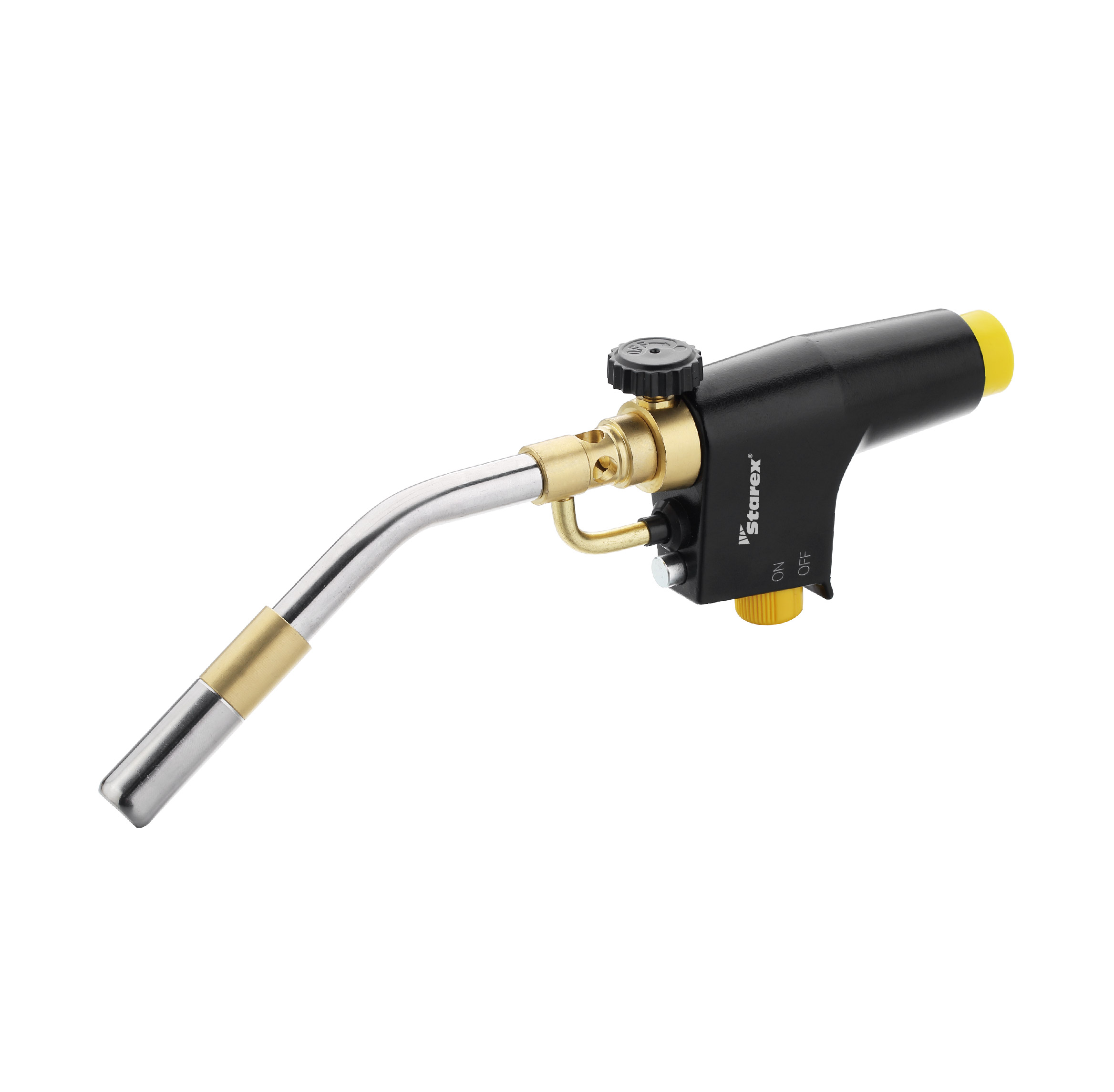
Choosing the right fuel requires analyzing technical specifications alongside practical field performance. The table below outlines the primary differences between the two fuel types when used in a standard handheld configuration.
Feature | MAPP Gas (MAP-Pro/Propylene) | Propane Gas |
|---|---|---|
Flame Temperature (in air) | ~3,730°F (2,054°C) | ~3,600°F (1,982°C) |
Heat Transfer Rate | Extremely Fast | Moderate / Slower |
Primary Application | Brazing, HVAC, Metal Shaping | Soft Soldering, Thawing, Culinary |
Risk of Overheating | High (on thin metals) | Low to Moderate |
Upfront Fuel Cost | Higher | Lower |
While the exact temperature difference in the air is roughly 130°F to 150°F, heat transfer speed remains the most critical metric for metalworkers. Faster heat transfer means the base material reaches the required brazing threshold quicker. Prolonged exposure to an open flame increases the oxidation (black scale buildup) inside the tubing. Therefore, faster heating equals less oxidation, ultimately resulting in a cleaner, stronger joint.
Furthermore, because MAPP gas finishes jobs rapidly, the operator consumes less gas per connection. In a commercial setting where dozens of joints are fabricated daily, this increased efficiency frequently offsets the higher initial cost of the yellow MAPP cylinder.
To determine the right tool for heavy-duty jobs, it is crucial to understand the technical definition of the process. Brazing is a metal-joining process where a filler metal is heated above 840°F (450°C) and distributed between close-fitting parts by capillary action. Because the filler metal requires intense, localized heat to melt without liquefying the base metal, your choice of fuel is paramount.
Looking at recent developments in the HVAC industry, there is a massive global shift toward low-GWP (Global Warming Potential) refrigerants, such as R-32 and R-454B. These modern A2L refrigerants operate under extreme pressures and carry mild flammability ratings. Consequently, industry regulations regarding joint integrity have become stricter than ever. Microscopic leaks are no longer just an efficiency issue; they are a safety and compliance liability.
To meet these stringent standards, technicians strictly rely on a high-output brazing torch powered by MAPP gas. Copper possesses exceptional thermal conductivity, pulling heat away from the joint rapidly. MAPP gas delivers concentrated heat instantly, melting the silver brazing alloy in seconds and ensuring a structurally flawless, leak-proof bond capable of withstanding modern system pressures.
Joining dissimilar metals, such as brass to mild steel, presents a unique metallurgical hurdle. Steel has a massive thermal mass. It requires substantial energy to reach the correct temperature for the flux to activate. If the heating process is too sluggish, the chemical flux will literally burn away before the steel reaches the target temperature, resulting in a brittle, porous joint. The rapid transfer rate of propylene fuel brings the steel up to a cherry-red state efficiently, keeping the flux active and the joint clean.
While brazing demands peak thermal performance, many daily tasks require a much more forgiving approach. Applying too much heat can easily ruin a delicate project.
Soft soldering is the standard method for joining residential water lines. This process utilizes tin, antimony, or lead-free solder alloys that melt at much lower temperatures—typically between 350°F and 450°F. For these standard plumbing tasks, a basic propane setup is more than sufficient.
Unless you are a highly experienced plumber, using MAPP gas on small 1/2-inch residential copper pipes is generally discouraged. The intense heat can easily overheat the joint, boiling the flux into a blackened crust. This completely prevents the solder from adhering to the copper.
Mechanics frequently battle severely rusted bolts on exhaust manifolds or suspension components. The most effective way to break this chemical rust bond is through thermal expansion. Because automotive components act as massive heat sinks, MAPP gas is vastly superior here. It transfers heat into the seized nut so rapidly that it expands away from the bolt before the thermal energy can travel into surrounding plastic housings or rubber bushings.
Selecting the right fuel is only half the equation. The design and engineering of the equipment itself dictate how efficiently that fuel is delivered to the workpiece. When evaluating tools for the job site, specific hardware parameters matter.
Historically, technicians had to open the gas valve and fumble with a manual flint striker to ignite the flame. This is a cumbersome and dangerous practice in tight spaces. Investing in a modern auto ignite hand torch drastically improves workflow speed and safety. Models utilizing a piezoelectric ignition system allow you to press the trigger to simultaneously open the valve and generate a spark. Releasing the trigger instantly extinguishes the flame, saving fuel and preventing accidental workshop fires.
The internal design of the burn tube determines the behavior of the fire. High-end models feature a machined brass tip that creates a vortex or "swirl" flame. This aerodynamic design forces the fire to wrap entirely around the curvature of a pipe, ensuring even heat distribution across the entire circumference.
Professional workflows are rarely static. A contractor might solder a small water line in the morning and braze a heavy refrigerant line in the afternoon. The most practical solution is investing in a versatile propane MAPP gas torch head. Look for units built with standard CGA600 connection threads, solid brass internal regulators, and stainless steel burn tubes. These premium heads safely manage the extreme heat of propylene while accepting cheaper propane cylinders for light-duty work.
Executing a flawless braze requires strict adherence to procedural steps. Skipping even one phase can compromise the structural integrity of your hard work. Follow these practical steps for a secure joint:
Step 1: Preparation: Cleanliness is absolute. Use emery cloth or wire brushes to scrub the base metals until they are shiny and free of all dirt, grease, and dark oxidation.
Step 2: Fuel Selection: Assess your material thickness. Attach the appropriate cylinder to your torch head. Thread it on hand-tight and listen carefully for any hissing that indicates a gas leak before proceeding.
Step 3: Applying Flux: If brazing dissimilar metals, brush an even layer of appropriate chemical flux onto the cleaned joint to prevent oxidation during the heating cycle.
Step 4: Heating the Joint: Ignite the flame and adjust the regulator. Position the inner blue cone slightly away from the metal. Keep the flame moving constantly in a sweeping motion to heat the base metals evenly. Never heat the filler rod directly.
Step 5: Applying the Alloy: Watch the metal closely. Once it reaches a dull cherry red, touch the filler rod to the joint seam. The heat of the base metal should melt the rod instantly, allowing capillary action to pull the liquid alloy deep into the fitting.
Step 6: Cooling: Remove the heat and let the joint cool naturally in the ambient air. Quenching it in water too fast can cause micro-fractures in the joint.
Not always. While premium torch heads are dual-compatible, using MAPP gas in a tool rated only for propane can be highly dangerous. MAPP gas burns significantly hotter and operates at different internal pressures. A tool not designed for these thermal loads can melt its internal seals, leading to hazardous gas leaks. Always verify that your equipment is certified for dual-fuel use (typically utilizing a CGA600 thread) before swapping cylinders.
Yes. Modern MAPP substitutes (like MAP-Pro) burn roughly 130°F to 150°F hotter in the air than standard propane. More importantly, MAPP gas possesses a much higher primary heat transfer rate. This means it delivers its thermal energy into the metal significantly faster, reducing overall job time.
A standard 14.1 oz (400g) cylinder of MAP-Pro gas typically provides between 2 to 3 hours of continuous burn time. However, this varies heavily based on how wide you open the regulator valve and the ambient temperature of your workspace. Because MAPP heats joints so quickly, a single cylinder can often last a professional HVAC technician several days of intermittent brazing.
For standard residential plumbing involving small copper water lines (soft soldering with tin/antimony alloys), a propane setup is perfectly fine. It is often recommended to prevent accidental overheating. However, for commercial plumbing, large-diameter pipes over 1 inch, or brazing refrigeration lines, MAPP gas is highly recommended.
While technically possible on very thin stock, it is highly inefficient and risky. Brass and copper dissipate heat rapidly. Propane often struggles to overcome this thermal loss, leading to prolonged heating times that burn away your flux and create weak, oxidized joints. MAPP gas is the correct choice for this application.
If your piezoelectric ignition is failing, check the gas flow first. If the valve is opened too far, the rushing gas literally blows out the electrical spark before it can catch. Always open the valve just a slight crack until you hear a faint hiss, then hit the ignition. Secondly, check if the brass tip is clogged with flux splatter, which disrupts gas flow.
Ultimately, while standard propane remains a fantastic, budget-friendly option for light soldering and simple household tasks, the MAPP gas setup stands as the undisputed champion for heavy-duty metalwork. Its rapid heat transfer and high thermal output make it mandatory for professional HVAC brazing, automotive repair, and advanced metal shaping.
Stop wasting time waiting for metal to heat up and risking joint integrity with the wrong tools. The smartest move for any tradesperson is to invest in high-quality, dual-fuel compatible equipment featuring reliable piezoelectric ignition and swirl-flame technology. Equip your crew with tools built for the realities of the job site. Explore the full lineup of professional-grade hand torches and brazing equipment at Starex Weld to ensure you always have the exact amount of heat required for a perfect joint.