
Views: 167 Author: Site Editor Publish Time: 2026-08-07 Origin: Site


In industrial fabrication and heavy manufacturing, selecting the correct cutting method is dictated by metallurgy, not preference. Applying gas cutting to incompatible metals results in severe material degradation, excessive slag, compromised structural integrity, and wasted operational hours. Fabricators must align their equipment capabilities with the chemical and thermal realities of their material inventory. Attempting to force a thermal process on the wrong alloy damages the workpiece and creates safety hazards on the shop floor. This guide provides a technical evaluation of which metals can be effectively processed using oxy-fuel methods. We examine the underlying oxidation mechanics that dictate these limitations. You will also learn how to configure fuel gases, torches, and nozzles for optimal operational efficiency. By understanding the exact metallurgical requirements, operators can prevent costly rework and maintain high production standards.
Ferrous Dominance: Standard gas cutting is exclusively effective for metals whose oxides have a lower melting point than the base metal itself, primarily mild and low-carbon steels.
Non-Ferrous Limitations: Aluminum, copper, brass, bronze, and stainless steel cannot be cut with standard oxy-fuel methods due to their inability to sustain the required exothermic oxidation reaction.
Gas Selection Impacts ROI: Transitioning from acetylene to alternative gases like propylene can yield up to a 30% increase in cutting speed and significantly reduce post-cut grinding (slag removal) on thicker plates once the material reaches kindling temperature.
Hardware Precision: Achieving clean, continuous cuts requires precise alignment of metal thickness with the correct cutting torch configuration and cutting nozzle orifice size, such as industry-standard Victor-style setups.
Many operators mistakenly view thermal cutting as a mechanical severing process. In reality, it is a rapid, controlled chemical oxidation process. The success of this operation depends entirely on how a specific metal reacts to oxygen at elevated temperatures. You are not melting the metal to separate it. You are burning it away in a highly localized, controlled environment.
The process begins with a preheat flame. This flame brings the localized area of the metal up to its kindling temperature. For mild steel, this is typically around 1,600°F (870°C), indicated by a bright cherry-red color. Once the metal reaches this critical heat threshold, the operator introduces a high-pressure stream of pure oxygen. This oxygen jet triggers a violent exothermic reaction. The metal rapidly oxidizes, generating its own massive amount of heat. The sheer force of the oxygen stream blows away the resulting liquid slag. This continuous chemical reaction sustains the cut along the intended path, allowing the operator to move the torch forward.
A strict metallurgical rule governs this entire operation. The metal must ignite and oxidize before it actually melts. Furthermore, the resulting metal oxide must have a lower melting point than the base metal itself. If the oxide melts at a higher temperature, it forms a protective crust. This crust blocks the oxygen stream and instantly halts the cutting process. Understanding this melting point dynamic is the key to knowing which materials you can process on the shop floor.
Metal Type | Base Metal Melting Point | Oxide Melting Point | Suitability for Oxy-Fuel |
|---|---|---|---|
Low-Carbon Steel | ~2,750°F (1,510°C) | ~2,500°F (1,370°C) | Excellent |
Aluminum | ~1,220°F (660°C) | ~3,760°F (2,070°C) | Incompatible |
Stainless Steel (304) | ~2,650°F (1,450°C) | ~4,100°F (2,260°C) | Incompatible |
Copper | ~1,980°F (1,080°C) | ~2,240°F (1,225°C) | Incompatible |
Certain ferrous metals possess the exact chemical properties required for clean, efficient oxidation. These materials form the backbone of heavy structural fabrication, shipbuilding, and general construction.
Mild and low-carbon steels are the ideal candidates for this process. Their carbon content (typically under 0.3%) and oxidation behavior perfectly match the requirements of oxy-fuel systems. The iron oxidizes rapidly, and the resulting slag remains fluid enough to be expelled easily by the oxygen jet. Operators can process an incredible range of thicknesses. You can cleanly slice through thin sheet metal or sever massive steel plates exceeding 24 inches in thickness with the proper equipment setup. The kerf remains narrow, and the heat-affected zone is manageable for most structural applications.
You can process medium and high-carbon steels, but they introduce specific implementation risks. The higher carbon content (ranging from 0.3% to over 1.0%) significantly increases the risk of cracking and hardening within the Heat-Affected Zone (HAZ). The rapid heating and cooling cycle alters the localized microstructure of the steel, often forming brittle martensite along the cut edge.
To mitigate these risks, fabricators must implement strict thermal controls. Mandatory pre-heating of the entire workpiece reduces thermal shock and slows the cooling rate. Controlled post-cut cooling procedures, such as burying the part in sand or using thermal blankets, prevent brittle microstructures from forming. Without these steps, the cut edge will likely fail during subsequent welding or machining operations.
Cast irons present a unique challenge. Their high carbon (2% to 4%) and silicon content actively disrupts the oxidation stream. The slag becomes thick and refractory, resisting the oxygen jet. The material tends to melt rather than oxidize cleanly.
Standard methods will fail on cast iron. You must employ specialized techniques to achieve a successful cut. Operators often use a specialized cutting nozzle designed for heavy preheating. Oscillating torch movements help clear the stubborn slag. In some cases, injecting iron powder into the cutting stream creates the necessary exothermic reaction to melt through the refractory slag. However, these workarounds come with a severe trade-off in cut edge quality, leaving a rough, jagged finish that requires extensive grinding.
Applying oxy-fuel methods to incompatible metals wastes time and destroys material. Understanding why these metals fail prevents costly fabrication errors and keeps operators focused on viable processes.
Non-ferrous alloys suffer from a fundamental chemical failure point during oxy-fuel processing. These metals do not react properly with oxygen to sustain an exothermic reaction. Their oxides possess significantly higher melting points than the base metals. When you apply a torch to aluminum or copper, the metal simply melts and deforms rather than oxidizing into a removable slag. The operator is left with a melted puddle rather than a severed plate.
Thermal conductivity also plays a major role in this failure. Copper and aluminum dissipate heat incredibly fast. This high thermal conductivity prevents the localized accumulation of heat required to maintain a continuous cut. The heat spreads throughout the entire plate, ruining the material temper without severing it.
Stainless steel is engineered specifically to resist oxidation, making it inherently resistant to this cutting method. The high chromium content creates a barrier effect. When exposed to the oxygen stream, the chromium instantly forms a refractory chromium oxide layer. This layer has a melting point significantly higher than the steel itself. It acts as a fireproof shield, completely halting the process. Attempting to force a cut will only result in a melted, gouged mess.
Titanium and similar aerospace alloys suffer extreme metallurgical degradation when exposed to oxy-fuel flames. The extreme heat input causes severe discoloration, embrittlement, and deep surface damage. The metal absorbs oxygen and nitrogen from the atmosphere at high temperatures, ruining its structural integrity. Standard oxy-fuel methods are entirely unacceptable for these sensitive alloys. They require cold cutting methods or highly controlled inert environments.
The fuel gas you select directly impacts your operational efficiency, preheat times, and post-cut cleanup requirements. Different gases offer distinct thermal profiles.
Acetylene produces the highest flame temperature of any commercially available fuel gas, reaching up to 5,720°F (3,160°C) when mixed with oxygen. This intense heat makes it ideal for rapid pre-heating and quick piercing operations. It allows operators to start cuts faster than alternative gases, which is highly beneficial for short, intermittent cuts or working with heavily rusted materials.
However, acetylene has notable drawbacks. It generally carries a higher volumetric cost. It also comes with strict safety and storage limitations. Acetylene becomes highly unstable at pressures above 15 psi, requiring specialized handling, flash arrestors, and manifold systems. It is also not suitable for cutting extremely thick steel plates due to its specific heat distribution.
Alternative gases like propylene offer compelling performance advantages for heavy fabrication. While propylene has a slightly lower initial flame temperature, it delivers massive heat volume in the outer envelope of the flame once the metal reaches kindling temperature. Propylene can cut 25-30% faster than acetylene on specific plate thicknesses, particularly on materials over one inch thick.
The primary outcome is a highly focused heat cone. This focused energy results in nearly slag-free cuts. The smooth edge quality drastically reduces secondary grinding costs, saving valuable labor hours. Propylene is also safer to store and can be used at higher line pressures.
Selecting the best gas requires analyzing your specific production needs. Consider the following factors when outfitting your shop:
Fuel Gas | Primary Advantage | Best Application | Drawbacks |
|---|---|---|---|
Acetylene | Highest flame temperature | Fast piercing, thin materials, short cuts | Pressure limits, higher cost per cubic foot |
Propylene | Superior cutting speed, clean edges | Thick plate cutting, automated track torches | Slower initial preheat time |
Propane | Excellent availability, safe storage | Scrap cutting, heavy heating, beveling | Requires different torch tips, high oxygen use |
Natural Gas | Lowest operational cost | Stationary shop setups, heavy heating | Very slow preheat, requires high oxygen flow |
Hardware configuration dictates the quality of the final cut. Mismatched equipment leads to poor edge quality, excessive gas consumption, and safety hazards.
The nozzle orifice size strictly dictates the oxygen flow rate and pressure. Using an undersized nozzle restricts the oxygen stream, causing cut loss mid-plate. The operator will have to stop, clean the gouge, and restart the cut. Conversely, an oversized nozzle wastes expensive gas, creates wide, sloppy kerfs, and melts the top edge of the plate, requiring extensive grinding.
Operators should rely on standardized numbering systems to guide their selection. Manufacturers provide specific charts that map exact metal thicknesses to the required orifice size and regulator pressure settings. Always consult the manufacturer's data sheet for your specific tip style.
Metal Thickness | Typical Nozzle Size (Victor Style) | Oxygen Pressure (PSI) | Fuel Pressure (PSI) |
|---|---|---|---|
1/4 Inch | 00 | 20 - 25 | 3 - 5 |
1/2 Inch | 0 | 25 - 30 | 3 - 5 |
1 Inch | 1 | 30 - 35 | 3 - 5 |
2 Inches | 2 | 35 - 45 | 3 - 7 |
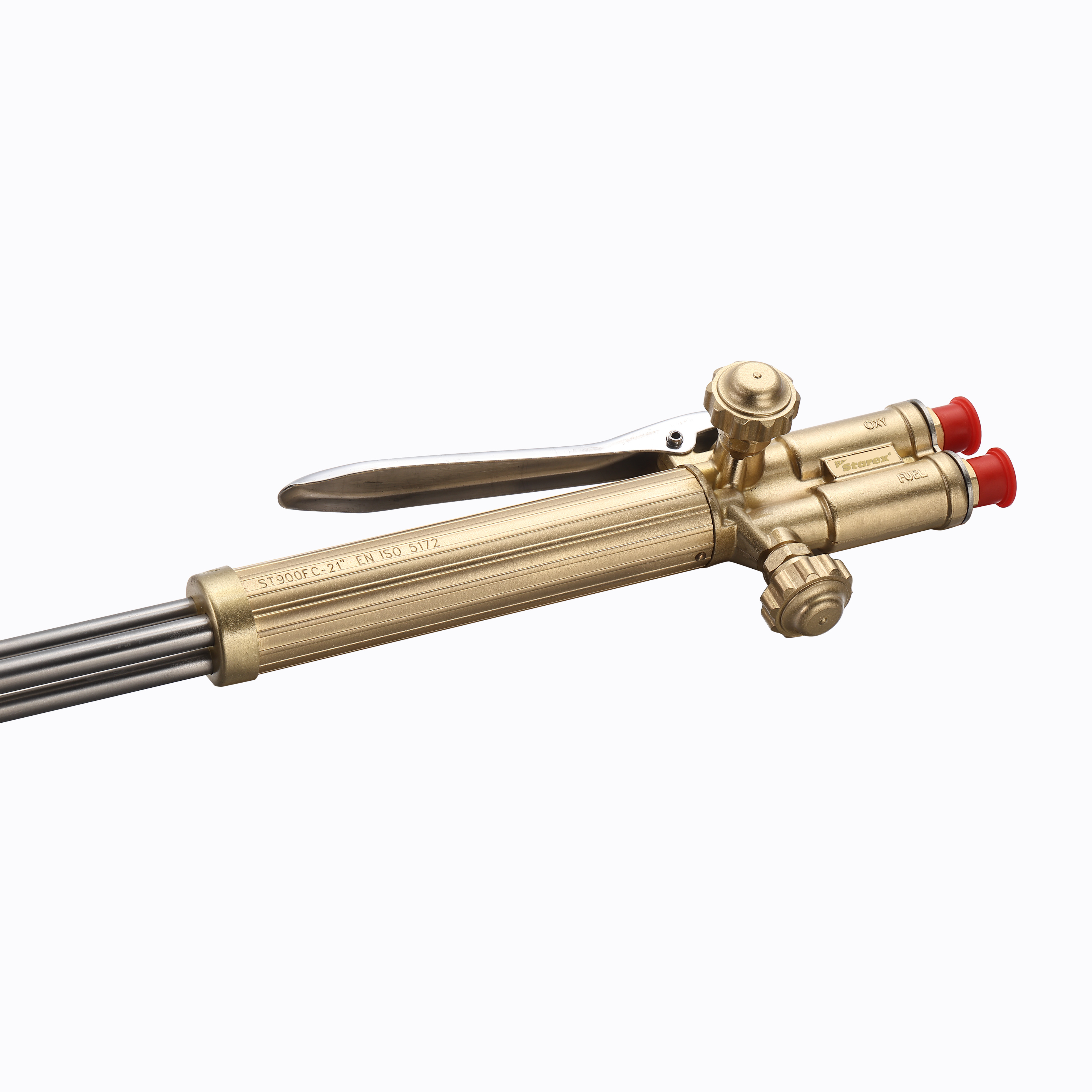
Your choice of cutting torch depends entirely on the application. Heavy-duty, straight torches are designed for automated track machines and continuous heavy plate severing. They keep the operator's hands away from the intense heat and provide a rigid platform for machine mounting.
Standard manual combination torches offer versatility for general fabrication tasks. These allow operators to swap between cutting attachments, welding tips, and heating roses quickly. This flexibility is essential for maintenance crews and custom fabricators who handle diverse tasks throughout the day.
Proper maintenance prevents dangerous flashbacks and ensures consistent gas flow. Operators must clean splatters from the tip orifices using dedicated tip cleaners. Never use wire brushes or drill bits, as these distort the precision-machined holes. Regularly inspect the seating surfaces on both the torch head and the nozzle for deep scratches or carbon buildup. A compromised seat will leak mixed gas, creating a severe safety hazard. Always purge the lines before lighting the torch to remove any mixed gases.
While oxy-fuel is a staple of heavy industry, modern fabrication often requires alternative thermal or mechanical methods for specific materials and tolerances.
Plasma is the superior choice for non-ferrous metals, stainless steel, and thinner gauges of mild steel. Plasma uses an electrically ionized gas to melt and blow away the material. It offers exceptional speed on materials under one inch thick. It also produces a minimal HAZ without causing severe discoloration or surface damage on sensitive alloys. If your shop processes a high volume of aluminum or stainless steel, a plasma system is mandatory.
High-precision methods bypass thermal degradation issues entirely. Waterjet cutting uses a high-pressure stream of water and abrasive garnet to erode the material. It introduces zero heat, making it ideal for heat-sensitive metals like titanium and specific aerospace aluminum alloys. The edge quality is exceptional, requiring no secondary finishing.
Laser cutting offers unmatched speed and precision on thin sheet metals. It produces incredibly tight tolerances and clean edges. While limited by plate thickness compared to oxy-fuel, lasers dominate high-volume sheet metal production.
Oxy-fuel equipment boasts a very low initial CapEx. The gear is highly portable, making it perfect for field repairs, demolition, and construction sites. You can outfit a truck with a complete rig for a fraction of the cost of other systems. However, the process is slower and more labor-intensive, leading to higher OpEx on large production runs.
Laser and waterjet systems require a massive initial CapEx and dedicated facility space. They also require specialized maintenance and programming. However, for high-volume production, their speed and precision result in a significantly lower per-part OpEx, quickly justifying the initial investment.
Oxy-fuel processing remains the most cost-effective and portable solution for severing thick mild and low-carbon steels. However, it is fundamentally incompatible with non-ferrous metals and stainless steel due to restrictive oxidation mechanics. To optimize your fabrication workflows, follow these actionable steps:
Audit your current material inventory to separate ferrous materials suitable for oxy-fuel from non-ferrous alloys requiring plasma or waterjet processing.
Consult with a welding specialist to evaluate alternative fuel gases like propylene for thick plate applications to reduce grinding time.
Standardize nozzle selection charts across the fabrication floor to prevent operators from using oversized tips that waste oxygen.
Implement strict pre-heating protocols for any medium or high-carbon steel components to prevent HAZ cracking.
A: No. The chromium in stainless steel forms a high-melting-point oxide layer that prevents the oxygen stream from penetrating and severing the metal. Plasma or laser cutting is required.
A: Excessive slag is typically caused by moving the torch too slowly, using an incorrect oxygen pressure setting, or utilizing a damaged or improperly sized nozzle.
A: Propylene often provides a cleaner cut with less slag and can cut up to 30% faster once the metal is heated, though acetylene offers a faster initial pre-heat time.
A: No. Both aluminum and bronze melt or dissipate heat before they can oxidize properly in an oxy-fuel process, resulting in a melted, deformed edge and severe surface discoloration rather than a clean cut.
A: Cutting nozzle size is dictated entirely by the thickness of the metal being cut. Manufacturers provide specific charts matching metal thickness to the required nozzle orifice size and gas pressure settings.
A: Standard methods are highly inefficient on cast iron due to its high carbon content. It requires specialized techniques, such as using a larger nozzle, a heavily carburizing flame, or iron powder, and results in a very rough edge.