
Views: 126 Author: Site Editor Publish Time: 2026-08-21 Origin: Site


Poor edge quality in thermal processing operations carries hidden operational costs that rapidly erode profit margins. When operators produce cuts with heavy slag, severe gouging, or rounded top edges, they force downstream departments into mandatory secondary operations. Grinding, milling, and extensive rework become necessary steps before welding or final assembly can even begin. These corrective actions consume valuable labor hours and rapidly deplete abrasive consumables.
Inconsistent edge quality is rarely a single-variable failure. It typically stems from a distinct misalignment between equipment condition, parameter settings, and operator execution. A perfectly calibrated machine will still produce jagged edges if the consumables are worn or the gas pressures are incorrect. Operators must understand how these variables interact to maintain a stable, high-velocity oxygen stream.
We need a systematic framework for diagnosing edge defects and optimizing the gas cutting process. By focusing on rigorous equipment evaluation, strict consumable management, and precise parameter control, operators can consistently achieve near-net-shape results. This approach eliminates unnecessary rework and streamlines the entire fabrication workflow.
Consumable Precision: The condition and exact sizing of the cutting nozzle dictate the oxygen stream's aerodynamics; mismatched or worn nozzles are the leading cause of kerf irregularities.
Parameter Synergy: Achieving a slag-free edge requires a strict balance between preheat flame intensity, cutting oxygen pressure, and travel speed relative to plate thickness.
Gas Purity Matters: Even a 1% drop in oxygen purity can decrease cutting speed by up to 25% and significantly increase dross adherence, impacting overall edge squareness.
Standardization Over Intuition: Transitioning from operator guesswork to documented, material-specific cutting charts reduces implementation risks and ensures repeatable quality across production runs.
Industry standards define a high-quality cut through specific visual and dimensional metrics. A superior cut features a perfectly square top edge with minimal melting or rounding. The cut face itself must remain smooth, displaying near-vertical drag lines that indicate optimal travel speed and gas pressure. Furthermore, the bottom edge should be sharp and entirely free of tenacious slag or dross buildup. Achieving these criteria ensures the part is immediately ready for subsequent fabrication steps without manual intervention.
Operators on the floor look for specific indicators right off the table. If a part requires a chipping hammer to remove bottom dross, the cut parameters failed. A proper cut allows the slag to fall away naturally or brush off with a gloved hand. The kerf width should remain uniform from the top surface to the bottom, indicating that the oxygen stream maintained its cylindrical shape through the entire plate thickness.
The thermal nature of the process inherently creates a Heat Affected Zone (HAZ) along the cut edge. Excessive preheat flames or unnecessarily slow travel speeds pump surplus heat into the base material. This excess thermal input significantly widens the HAZ. A wider HAZ can alter the steel's localized microstructure, creating hardened edges that complicate downstream welding, drilling, or machining operations. Controlling heat input is mandatory for maintaining the structural integrity of the parent metal.
When cutting high-carbon or alloy steels, the cooling rate following the cut dictates the hardness of the edge. If operators run the torch too slowly, they saturate the plate with heat. The subsequent rapid cooling from the surrounding cold plate acts as a quench, hardening the edge. This requires downstream machinists to slow their feed rates or risk shattering carbide tooling. Proper travel speeds minimize this thermal saturation.
Edge quality functions as a direct financial metric on the shop floor. Consider the theoretical cost savings achieved by completely eliminating post-cut grinding. When operators produce clean, square edges directly from the table, they bypass hours of manual labor and save on grinding discs. Positioning optimized thermal cutting as a primary driver of margin improvement changes how operators approach their daily setup routines.
Every minute spent grinding a beveled edge back to square is a minute lost in the welding bay. Fabrication shops often underestimate the labor burden of rework. By tracking the hours spent on secondary cleanup, management can easily justify the time spent training operators on proper torch setup and parameter control. Quality at the torch head equals profitability at the shipping dock.
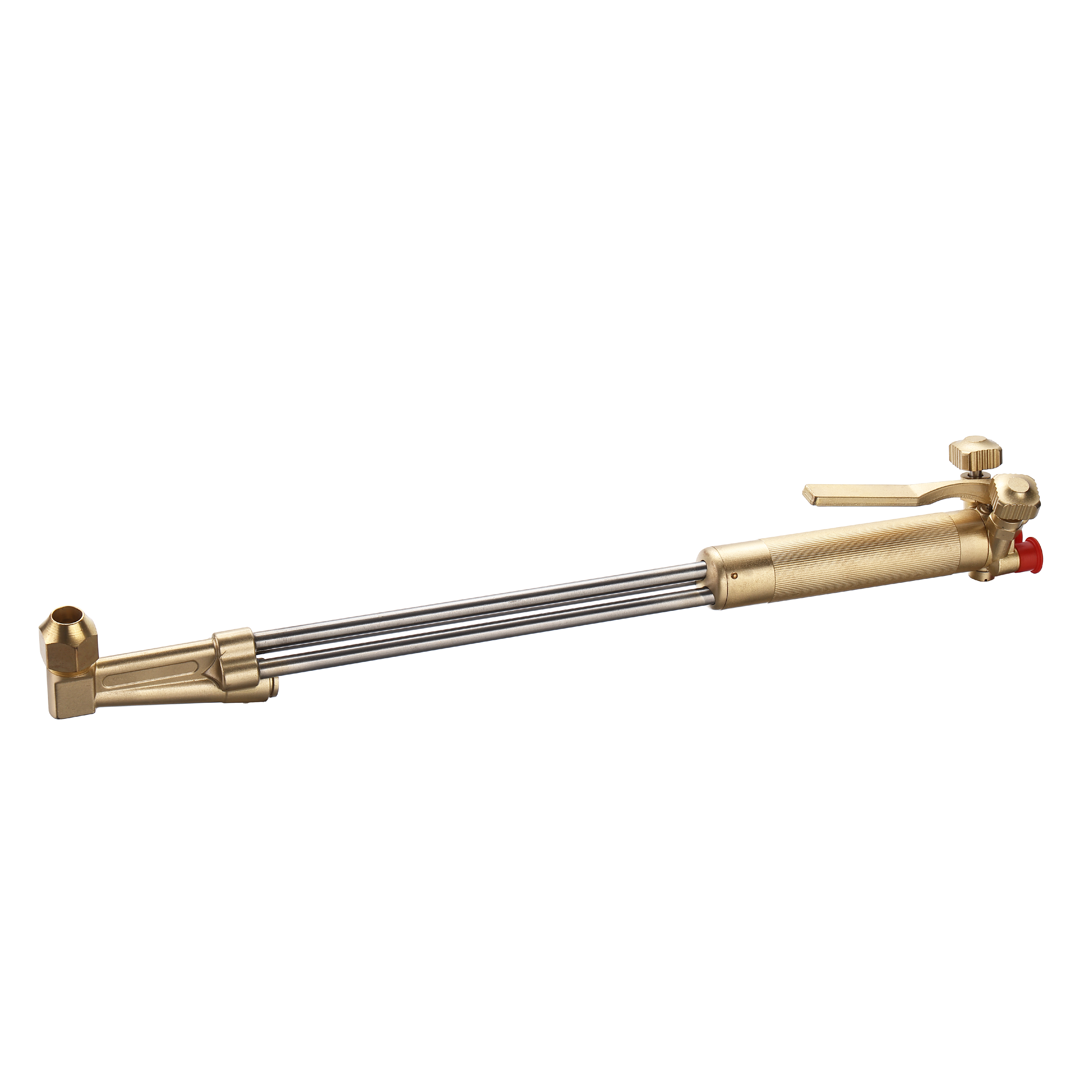
Equipment selection forms the foundation of edge quality. Manual torches offer flexibility for field repairs, while straight machine torches provide the rigid stability required for automated setups. Heavy-duty mechanized torches handle continuous production demands and thicker plates. Operators must evaluate the gas mixing mechanisms within these tools. Tip-mix designs mix the gases directly at the consumable, offering superior flashback resistance. Torch-mix designs blend gases further up the barrel, which can impact flame stability under varying pressure loads.
Choosing the correct cutting torch ensures reliable gas delivery to the workpiece. A torch with internal leaks or damaged seating surfaces will never produce a clean cut, regardless of operator skill. Regular pressure testing of the torch body is a non-negotiable maintenance task. If the valves feel loose or the gas flow surges, the torch requires immediate rebuilding or replacement.
The engineering behind the consumable directly influences the fluid dynamics of the oxygen stream. Standard nozzles feature a straight bore, suitable for general-purpose work on thinner materials. Divergent nozzles, however, utilize an expanding internal geometry. This design allows the cutting oxygen to reach supersonic speeds while maintaining a tight, cohesive jet. High-speed divergent designs are essential for achieving smooth faces on thicker plates.
The fluid dynamics of the supersonic oxygen jet exiting the consumable are highly sensitive to internal geometry. If the internal bore is scratched or damaged, shockwaves form within the gas stream. These shockwaves lead to premature jet divergence and severe turbulence. A turbulent jet creates a wider, rougher kerf and increases the likelihood of severe face gouging.
The nozzle must constrict and accelerate the oxygen stream to maintain a perfectly cylindrical jet. This cohesive shape is required for cutting a narrow, parallel kerf through the entire thickness of the steel. Any obstruction, even microscopic spatter, disrupts this laminar flow. Operators must treat these consumables as precision instruments, not blunt tools.
Matching the orifice size to the specific material thickness is a strict requirement. Operators often make the error of installing an oversized cutting nozzle in a misguided attempt to cut faster. This practice actually degrades edge squareness, creates excessive top-edge melting, and wastes expensive oxygen. A proper decision framework relies strictly on manufacturer cut charts, ensuring the orifice diameter provides the exact oxygen volume required to oxidize the specific plate thickness efficiently.
Using an undersized tip is equally problematic. It starves the cut of oxygen, resulting in incomplete penetration and a heavy slag trail. Operators must verify the plate thickness with calipers and select the corresponding tip size from the chart. Guesswork has no place in a professional fabrication environment.
The central cutting oxygen orifice must remain perfectly concentric with the surrounding preheat flame ports. Minor structural misalignments or manufacturing defects in the consumable cause directional variations in edge quality. If the preheat flames are asymmetrical, the cut edge will look pristine when traveling in one direction but show severe gouging or slag when the cutting path changes angle.
Precision manufacturing of the consumable ensures uniform heat distribution regardless of travel direction. When operators install a new tip, they should ignite the preheat flame and visually inspect the cone lengths. If one side of the preheat ring is visibly longer or shorter than the rest, the tip is defective and will cause directional beveling.
Establishing strict criteria for consumable replacement prevents gradual quality degradation. Spatter buildup on the face, bell-mouthing of the central orifice, or microscopic internal scratches disrupt laminar gas flow immediately. Operators should inspect consumables daily. Once the oxygen stream loses its cylindrical shape or the preheat flames become uneven, the consumable must be replaced.
Pushing worn parts past their usable lifespan always results in expensive rework that outweighs the cost of a new tip. A simple visual test involves turning on the cutting oxygen without the preheat flame. The oxygen stream should appear as a straight, tight cylinder. If it fans out or splatters, the tip is compromised.
Achieving a clean cut requires balancing the preheat oxygen-to-fuel gas ratio with the cutting oxygen pressure. The preheat flame must bring the steel exactly to its ignition temperature without excessively melting the top surface. Once the cut initiates, the fluid dynamics of the cutting oxygen stream take over. Too much pressure causes severe turbulence, resulting in deep gouging along the cut face.
Conversely, too little pressure fails to clear the molten slag from the kerf, leaving a solid weldment of dross along the bottom edge. Operators must set pressures with the gas flowing (dynamic pressure), not static. A static pressure reading will drop significantly once the torch valve opens, leading to an under-pressurized cut.
Travel speed dictates the angle of the drag lines on the cut face. Cutting too fast causes trailing drag lines, sparks deflecting upwards, and potentially incomplete penetration. The oxygen stream simply cannot keep up with the machine movement. Cutting too slow results in excessive heat input. This causes severe top-edge melting, unusually wide kerfs, and tenacious bottom dross that requires heavy grinding to remove.
Operators must calibrate speed by observing the spark trail exiting the bottom of the plate. The sparks should drop straight down or trail slightly (about 10 to 15 degrees) behind the direction of travel. If the sparks shoot forward, the speed is too slow. If they trail severely, the speed is too high.
Maintaining a consistent distance between the consumable and the workpiece is mandatory for edge squareness. If the stand-off distance fluctuates, the preheat focus changes, altering the kerf width dynamically. In mechanized setups, capacitive or voltage height control systems are absolute necessities. These systems actively adjust the height over warped plates, preventing edge beveling and ensuring the oxygen stream remains perfectly perpendicular to the material surface throughout the entire program.
For manual operations, operators must use guide wheels or stand-off springs to maintain a steady height. Freehand cutting without a guide almost guarantees a wavy, beveled edge. The inner cones of the preheat flame should sit just above the plate surface, typically 1/8 to 3/8 inch, depending on the fuel gas used.
Operating multiple torches simultaneously introduces complex flow dynamics. Pressure drops across a shared manifold can easily starve individual stations of oxygen or fuel gas. When one station pierces, the sudden pressure drop can extinguish or alter the flames on adjacent stations. Localized pressure regulation at each station is necessary to maintain consistent flow rates.
Operators must balance the system dynamically to ensure every station produces identical edge quality across the gantry. This requires setting the pressures while all torches are flowing simultaneously. Failing to account for manifold pressure drops results in the outer torches producing heavy slag while the inner torches cut cleanly.
The choice of fuel gas significantly influences preheat times and edge characteristics. Acetylene provides the highest flame temperature and the most rapid preheat, resulting in a narrow HAZ. However, it comes with higher costs and strict safety regulations regarding line pressure. Propane and Natural Gas offer lower flame temperatures and wider preheat zones. While they have slower pierce times, they often produce a cleaner top edge on thicker sections because they are less prone to melting the upper corner of the kerf.
Propylene sits between Acetylene and Propane in terms of heat output. It offers faster piercing than Propane but is safer to pipe at higher pressures than Acetylene. The specific gas chosen dictates the type of consumable required. Operators cannot mix and match tips; an Acetylene tip used with Propane will starve the flame and pop continuously.
Operators must frame the fuel gas decision around their specific production environment. Alternative fuels like Propane might lower direct gas costs per cylinder, but they might increase overall cycle times due to longer piercing routines. Furthermore, different gases require entirely different consumable designs, such as two-piece tips for Propane versus one-piece tips for Acetylene.
The cheapest gas does not always yield the lowest cost per cut when factoring in labor and cycle time. A shop processing thousands of short cuts daily might benefit from Acetylene's rapid piercing. A shipyard making long, continuous cuts on thick plate might find Propane more economical and capable of producing a sharper top edge.
High-purity oxygen is the lifeblood of the thermal oxidation process. The chemical exothermic reaction relies on oxygen purity of 99.5% or higher. Impurities act as thermal insulators, drastically degrading the cut face and slowing the reaction speed. Even a minor drop in purity forces the operator to slow the machine down to maintain the cut.
Furthermore, moisture, particulate matter, or oil residues within delivery hoses and manifolds contaminate the gas stream. This contamination leads to inconsistent burning, frequent popping, and micro-slag deposits along the entire cut edge. Facilities utilizing bulk oxygen tanks must ensure their vaporizers and line filters are maintained to prevent moisture carryover into the shop lines.
Operators need a clear framework for identifying and resolving edge defects quickly. Relying on visual indicators allows for rapid parameter adjustments before an entire plate is scrapped. The following matrix outlines the most common issues and their root causes.
Edge Defect | Primary Root Cause | Corrective Action |
|---|---|---|
Top edge melting or severe rounding | Excessive preheat flame or stand-off distance too close. | Reduce preheat oxygen/fuel ratio; increase torch height. |
Deep gouging on the cut face | Cutting oxygen pressure too high or damaged internal bore. | Lower oxygen pressure; replace worn consumable immediately. |
Hard, difficult-to-remove bottom slag | Travel speed too fast or cutting oxygen pressure too low. | Decrease machine travel speed; verify oxygen line pressure. |
Inconsistent beveling along the cut | Torch not perpendicular or misaligned central orifice. | Square the torch to the plate; check consumable concentricity. |
Wavy cut face with irregular drag lines | Machine vibration or fluctuating gas delivery pressure. | Inspect gantry rails for debris; rebuild gas regulators. |
Relying on undocumented knowledge introduces massive variability into the production process. When every operator sets pressures based on personal preference, edge quality fluctuates wildly from shift to shift. Facilities must advocate for the implementation of strict Standard Operating Procedures (SOPs). These SOPs must be based directly on manufacturer cut charts, detailing exact pressures, speeds, and consumable sizes for every material grade and thickness processed on the floor.
Training programs should focus on the "why" behind the parameters, not just the "how." When an operator understands fluid dynamics and thermal input, they make intelligent adjustments rather than random guesses. Post the cut charts directly on the machine console to eliminate the excuse of not knowing the correct settings.
A preventative maintenance schedule for the entire delivery system is vital for sustained edge quality. Operators must regularly clean and inspect all seating surfaces and O-rings to prevent micro-leaks that alter gas ratios. Verifying gas regulator accuracy ensures flow stability under heavy production loads.
Inspect and clean torch head seating surfaces weekly using approved reamers.
Leak-test all hose connections and manifold fittings monthly with a certified leak detection solution.
Test check valves and flashback arrestors for internal carbon buildup every six months.
Verify dynamic flow pressures at the torch head using an inline flow meter annually.
Restrictions in safety devices cause localized pressure drops that severely degrade cut consistency and induce face gouging. A regulator that creeps or drops pressure under load will ruin a cut halfway across a plate. Maintenance is not optional; it is a core component of edge quality.
Superior edge quality is achieved not through expensive secondary fixes, but through the precise control of fluid dynamics, system maintenance, and thermal input at the torch head. Operators who master the relationship between gas pressure, travel speed, and consumable condition will consistently produce parts that bypass the grinding station entirely. This proactive approach protects profit margins and accelerates downstream fabrication.
Operators prioritizing edge quality should first audit their gas delivery lines and consumable program. Ensuring the use of OEM or high-quality consumables is far more effective than attempting to compensate for worn parts with higher gas pressures. Fix the foundation of the process before investing in entirely new mechanized systems or software upgrades.
To implement these improvements immediately, follow these next steps:
Conduct a thorough scrap analysis to identify the most frequent edge defects on the shop floor.
Calibrate all gas regulators and test the delivery lines for moisture or particulate contamination.
Standardize the consumable selection process by mandating the use of manufacturer cut charts.
Run standardized test cuts on scrap material to establish a baseline for acceptable edge squareness and smoothness before starting production runs.
A: Excessive dross is primarily caused by incorrect travel speeds or improper cutting oxygen pressure. Cutting too slowly allows excess heat to melt the kerf walls, creating heavy slag. Insufficient oxygen pressure fails to blow the molten material clear of the bottom edge.
A: It should be replaced as soon as visual defects appear in the oxygen stream or the preheat flames become asymmetrical. Routine inspections should occur daily. Bell-mouthing, internal scratches, or heavy spatter buildup dictate immediate replacement to prevent edge gouging.
A: Yes, significantly. The process relies on rapid oxidation. Even a 1% drop in oxygen purity below 99.5% can reduce cutting speeds by up to 25% and increase the amount of hard slag adhering to the bottom edge.
A: The optimal distance varies by material thickness and consumable size, but generally, the inner cones of the preheat flame should sit just above the plate surface (typically 1/8 to 3/8 inch). Consistent standoff prevents top-edge melting and kerf beveling.
A: Travel speed controls the drag lines on the cut face. Optimal speed produces near-vertical drag lines. Too fast creates trailing lines and incomplete cuts, while too slow causes deep gouging, wide kerfs, and excessive heat input into the base material.
A: Beveling usually occurs when the torch is not perfectly perpendicular to the plate, or when the cutting nozzle is damaged. A worn internal bore or a misaligned central orifice will cause the oxygen jet to deflect, creating an angled cut face.