
Views: 118 Author: Site Editor Publish Time: 2026-07-14 Origin: Site


In high-stakes industrial, welding, and cutting applications, selecting gas control equipment is never a simple commodity purchase. It represents a critical safety decision. It directly determines your operational consistency. Substandard units frequently introduce dangerous micro-leaks. They cause erratic pressure fluctuations throughout the system. These invisible issues drastically degrade your final weld quality. Poor cutting tolerances frequently occur. Worse, they expose facilities to severe safety risks. These include catastrophic flashbacks. Rapid oxygen-combustion events also threaten workers. Facility leaders must address these hidden hazards immediately. This article provides you a strict, compliance-driven framework. You will learn exactly how to evaluate your equipment. We help you shortlist a reliable Gas Regulator. We base this evaluation on flow precision. We also cover material integrity guidelines. Crucial industry standards like ISO and EIGA are fully explored. By understanding these factors, you can protect your workforce. You will optimize daily production output.
Flow vs. Pressure: Accurate evaluation requires distinguishing between static pressure containment and dynamic flow consistency as cylinder volume drops.
Stage Configuration: A dual stage gas regulator is mandatory for applications requiring precise, continuous delivery pressure without manual mid-operation adjustments.
Absolute Safety Redlines: Acetylene regulators must have hard physical limits under 15 psi, and oxygen regulators must guarantee absolute freedom from hydrocarbon contamination.
Lifecycle Cost over Unit Price: Overall expense is dictated by diaphragm lifespan, gauge durability, and compliance audit failure rates, not the initial purchase price.
Inconsistent gas delivery creates severe operational bottlenecks. Operators notice excessive consumable waste almost immediately. It causes frustrating weld porosity. Poor cutting tolerances frequently occur during active shifts. Teams face increased rework hours. These issues compound quickly. They drain facility resources. We must look closely at the technical realities. You need to understand the fundamental difference. Pressure acts as the sheer force of the gas. It pushes outward against the internal cylinder walls. Flow represents the volume delivered over a specific period. You must distinguish between these two properties.
Evaluators must verify how a welding gas regulator performs under continuous stress. It must maintain exact flow rates. This consistency must happen even as cylinder pressure drops. A full cylinder acts very differently than a nearly empty one. You should demand strict documentation from manufacturers. Request specific flow curves. Ask for accurate pressure drop metrics. Industry experts call this drop "droop". Never accept vague marketing claims regarding high accuracy. Look for concrete performance data.
Droop happens naturally during operation. Cylinder pressure drops from 2000 psi to 500 psi. Some control units cannot compensate perfectly. The internal spring pushes harder against the weakening gas pressure. This forces the delivery pressure higher. The operator must intervene manually. They must turn the adjustment knob counter-clockwise. This action lowers the pressure back to the target range. If they forget, the cutting flame runs too hot. It melts the steel edges improperly. It ruins the exact cutting tolerance. We consider this a massive hidden operational cost.
Chart: Pressure vs. Flow Characteristics | |||
Metric | Definition | Measurement Unit | Operational Impact |
|---|---|---|---|
Static Pressure | Force exerted by the gas inside the cylinder or hose. | PSI / Bar | Determines containment safety and hose burst limits. |
Dynamic Flow | Volume of gas exiting the nozzle per minute. | CFH / LPM | Dictates weld shielding quality and cut precision. |
Pressure Droop | Loss of delivery control as cylinder empties. | Percentage (%) | Causes inconsistent flames requiring manual correction. |
When flow drops mid-operation, the shielding gas envelope fails. Oxygen enters the molten weld pool. This creates brittle, porous joints. Inspectors will fail these welds. Cutting torches behave similarly. A pressure droop changes the preheat flame intensity. The operator must stop cutting immediately. They must manually readjust the dials. This wastes valuable production time. We see this common mistake constantly. Buyers focus only on maximum pressure ratings. They completely ignore dynamic flow stability.
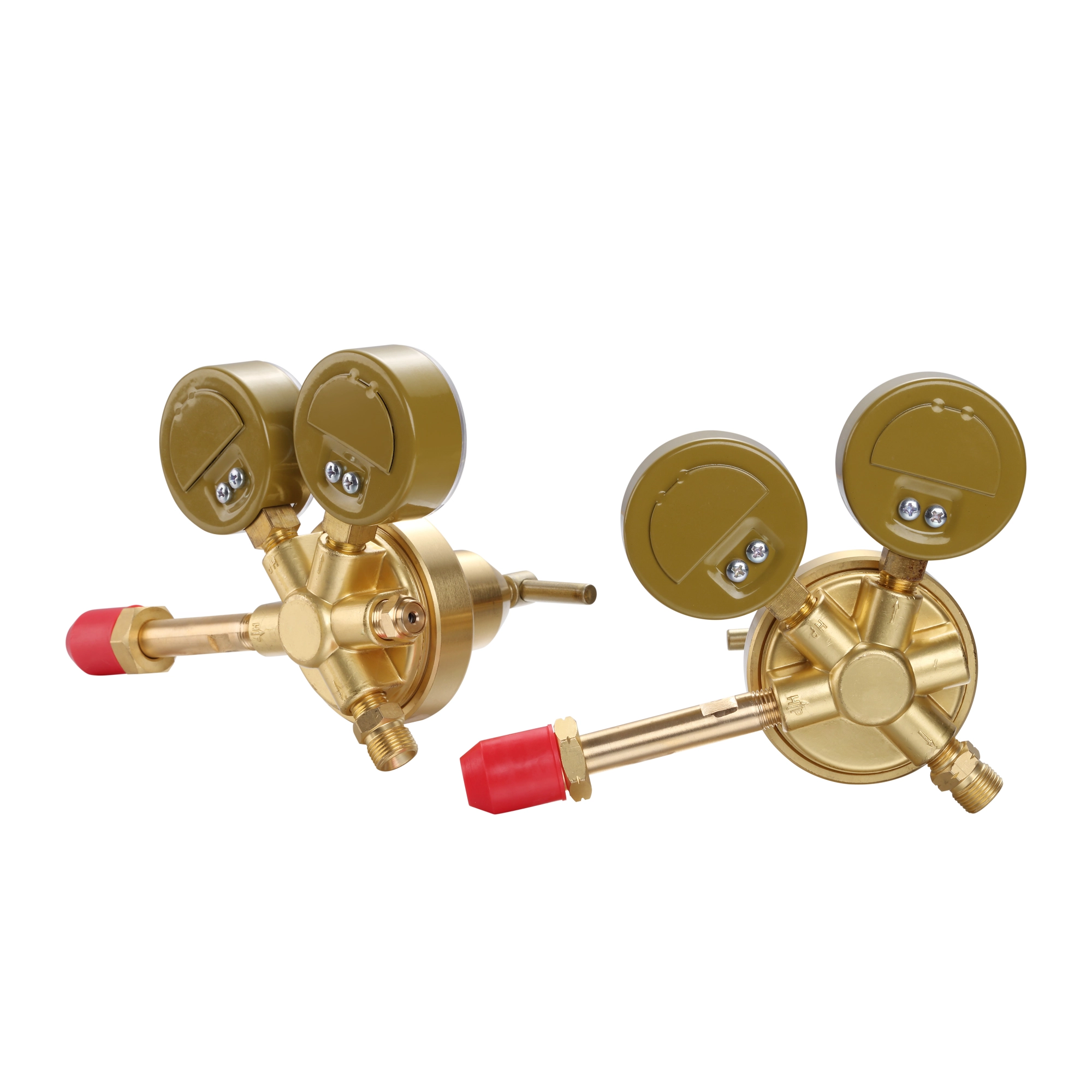
Single-stage models have clear mechanical limitations. They experience a noticeable delivery pressure increase over time. This happens as the internal cylinder pressure decreases. The primary internal spring loses counter-force. This physical change causes the outlet pressure to creep upward. We recommend single-stage units only for short-duration tasks. You can use them for rough manual cutting. Stopping to adjust dials mid-task is perfectly acceptable here.
However, complex tasks demand much more stability. Let us detail how a dual stage gas regulator operates. It drops the gas pressure in two distinct steps. The first stage handles severe cylinder fluctuations. It manages the massive bulk pressure reduction. It drops 2000 psi down to a manageable intermediate pressure. The second stage then takes over completely. It delivers a remarkably flat, unwavering flow line. The final output ignores the emptying cylinder status entirely.
Summary Chart: Single vs. Dual Stage Performance | ||
Feature | Single-Stage Models | Dual-Stage Models |
|---|---|---|
Pressure Droop | High variance as cylinder empties. | Virtually zero variance. |
Ideal Application | Short manual jobs, rough cutting. | Automated CNC, precise continuous welding. |
Operator Intervention | Frequent manual adjustments required. | Set once and forget. |
Internal Complexity | One diaphragm, one spring. | Two diaphragms, two springs. |
Follow this specific selection logic for your facility:
Evaluate the specific application duration. Tasks lasting longer than ten minutes require dual-stage control.
Assess the required precision level. High-precision TIG and MIG welding demand perfectly flat flow curves.
Consider your automation status. Automated CNC cutting machines cannot adjust dials mid-cut. They absolutely require two-stage stability.
Analyze continuous industrial processes. Unwavering flow consistency directly impacts your final product quality.
Matching the stage configuration to the operation prevents daily frustrations. It stops constant equipment tinkering. Your operators can focus on their actual work. They will not constantly monitor bouncing pressure dials.
Safety represents the highest priority in gas control. Let us reiterate a harsh chemical reality. Free acetylene gas becomes highly unstable above 15 psi. It turns explosive at this exact pressure. It requires no external oxygen to ignite internally. An oxygen acetylene regulator must feature tamper-proof relief valves. These valves prevent accidental over-pressurization. You must also see prominently red-lined gauges. Operators need immediate visual warnings. The 15 psi limit is an absolute, non-negotiable physical boundary.
Oxygen cleanliness standards are equally critical. Oxygen reacts violently when it contacts trace oils. It ignites instantly upon contact with any grease. This causes catastrophic equipment failure. Evaluators must inspect for verifiable compliance. Look closely for ISO 2503 standard marks. Check CGA guidelines for internal component cleanliness. Manufacturers must assemble these units in dedicated cleanrooms. Never compromise on this standard. Do not touch oxygen equipment while wearing oily gloves.
Flashback arrestors are absolutely necessary. You must integrate them into your system. We also recommend seamlessly compatible check valves. Check valves prevent the reverse flow of mixed gases. Arrestors extinguish actual flames traveling up the hose. A flashback occurs when the flame burns backward. It travels up the torch. It enters the hoses. It moves toward the cylinders at supersonic speeds. A robust flashback arrestor contains a sintered stainless steel element. This porous metal quenches the flame instantly. It absorbs the massive heat. Without these two mechanisms, a flashback can reach the cylinder. This causes a catastrophic explosion.
You must verify the brass forging density of the equipment. High-density forged brass contains internal pressure spikes better than cheap bar stock. Confirm strict material compatibility across all internal components. Neoprene diaphragms must resist chemical degradation over time. They must maintain their exact flexibility.
Facilities often handle many different gases. Avoid dangerous cross-gas practices at all costs. Some operators use makeshift adaptors. They try to swap devices between incompatible gases. We strongly warn against this hazardous behavior. You must use specific CGA (Compressed Gas Association) fittings. They structurally prevent catastrophic gas mixing.
The Compressed Gas Association designed specific thread patterns. They categorize them by unique gas properties. CGA 540 fits oxygen cylinders exclusively. It uses right-hand threads. CGA 510 fits acetylene and propane cylinders. It uses left-hand threads. You can identify left-hand threads by a distinct notch on the nut. This physical difference prevents disastrous mistakes. A tired operator cannot accidentally connect oxygen equipment to a fuel cylinder. Do not use cheater adaptors. They completely bypass this critical safety system.
When evaluating delivery for shielding gases, consider different mechanical setups. Introduce the propane flowmeter regulator for specific heating applications. Explore dedicated argon and CO2 configurations for advanced welding. Reading flow via a ball-in-tube mechanism is highly superior. It measures actual cubic feet per hour (CFH). It measures liters per minute (LPM) accurately. Gravity and internal orifice size provide true volume readings. It provides instant visual verification from across the room. A standard dial pressure gauge cannot offer this clarity. It only guesses the flow based on backpressure.
Standardize your equipment brands across the facility. This deliberate standardization reduces operator error significantly. Everyone learns one specific interface. It greatly simplifies maintenance training for your staff. You will streamline your spare parts inventory. Mechanics will not waste time hunting for obscure O-rings. They will repair standardized equipment much faster.
Shop floors present extremely harsh realities. Equipment suffers daily abuse. Cylinders get dropped constantly during transit. Threads strip during hasty bottle changes. Debris easily enters the delicate inlet filter. You must anticipate these implementation risks. You must evaluate durability indicators carefully before purchasing.
Inspect the primary housing materials. Choose heavy forged brass over cheap zinc alloys.
Demand shatterproof polycarbonate lens protection. Glass lenses shatter easily and expose delicate gauge needles.
Ensure you have fully replaceable inlet filters. Sintered bronze filters trap debris before it destroys the internal seat.
Check the adjustment knob construction. It must withstand heavy gloved hands without cracking.
A reliable industrial gas pressure regulator is ultimately a wear item. It requires proactive maintenance. Follow standard EIGA compliance recommendations. They mandate full replacements every five years. Elastomer diaphragms dry out and crack over time. Internal springs lose their critical tension. Implement strict visual inspection protocols before every single shift.
Visual inspections take only seconds. Train your operators properly. They must look for cracked gauge lenses. They should inspect the threads for visible burrs. They must check the inlet filter for brass shavings. If they hear a hissing sound, they must tag the unit out of service immediately. Do not attempt field repairs on internal components. Only certified technicians should rebuild these precision instruments in cleanroom environments.
Buyers must take specific next steps. Request a minimum three-year warranty from the manufacturer. Ask for documented proof of ISO compliance. Secure readily available regional support. You need fast access to replacement parts before issuing any purchase order. Equipment downtime costs far more than premium initial components.
Let us review the fundamental realities. Purchasing these control devices is primarily a strict risk-mitigation decision. It ensures absolute operational quality control. Flow consistency directly protects your daily production output. Material integrity directly protects your human workforce. Do not treat these complex tools as disposable accessories.
Take immediate action steps today. Audit your current gas delivery systems thoroughly. Look closely for pressure droop during active cutting or welding operations. Check overall safety compliance on every single cylinder. We encourage buyers to consult with certified gas equipment specialists. Test advanced two-stage models on your most demanding applications. Verify the results directly on the shop floor. Upgrading your equipment guarantees a safer, far more predictable work environment.
A: Industry safety protocols strongly recommend replacement or factory rebuilds every five years. While warranties vary by manufacturer, internal elastomer parts degrade over time. The rubber diaphragm hardens and loses flexibility. Internal springs also suffer fatigue. Regular replacement prevents dangerous leaks and ensures precise flame control.
A: No. Standard units deliver static pressure measured in psi or bar. Flowmeters deliver calibrated volumetric flow measured in SCFH or LPM. Using a pressure device for shielding applications causes uneven gas coverage. It wastes expensive gas and ruins your weld porosity.
A: Watch for creeping delivery pressure when gas is not actively flowing. Listen for audible leaks near the stem. Look for erratic gauge needle bouncing during operation. Freezing or heavy frost on the brass body also indicates internal failure. Replace failing units immediately.