
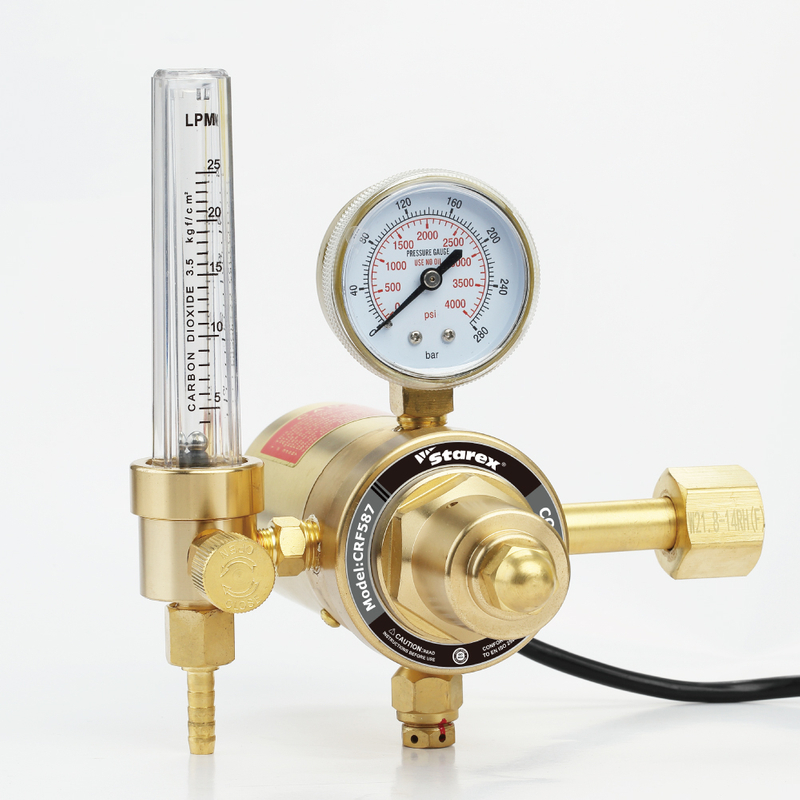

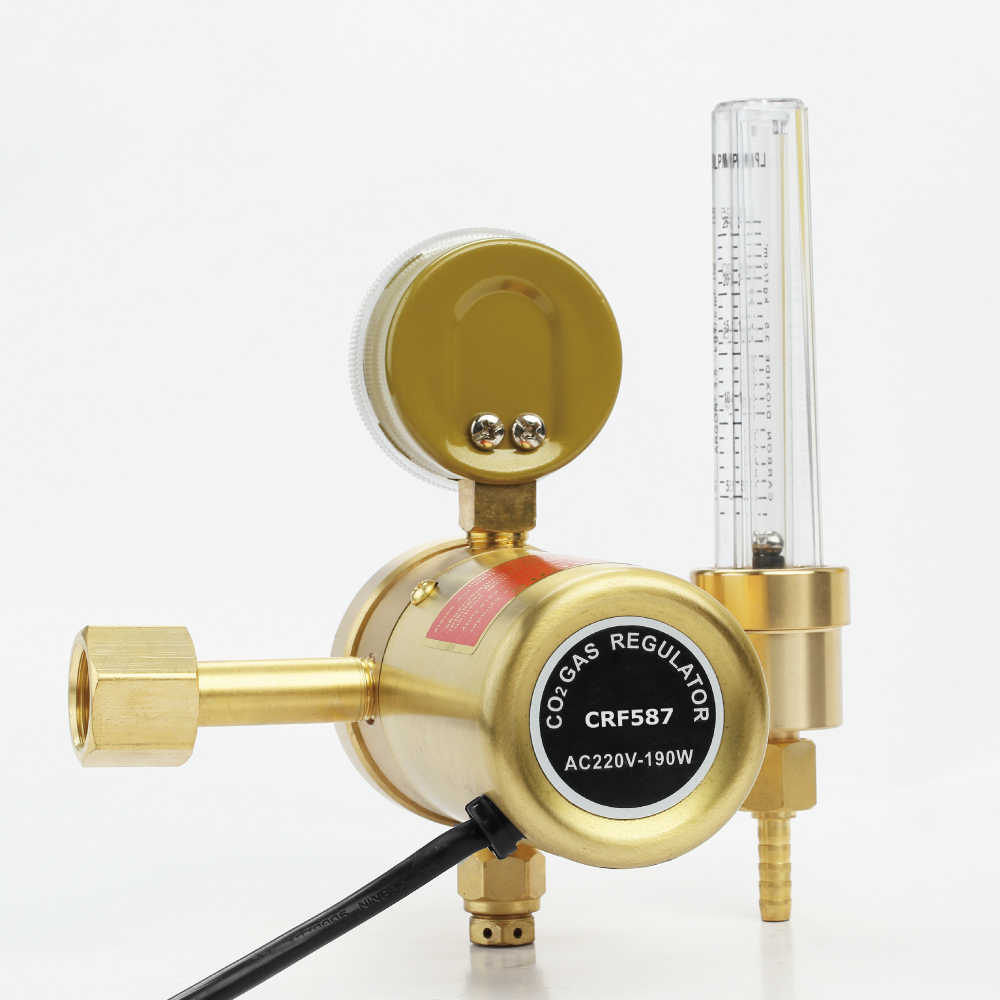
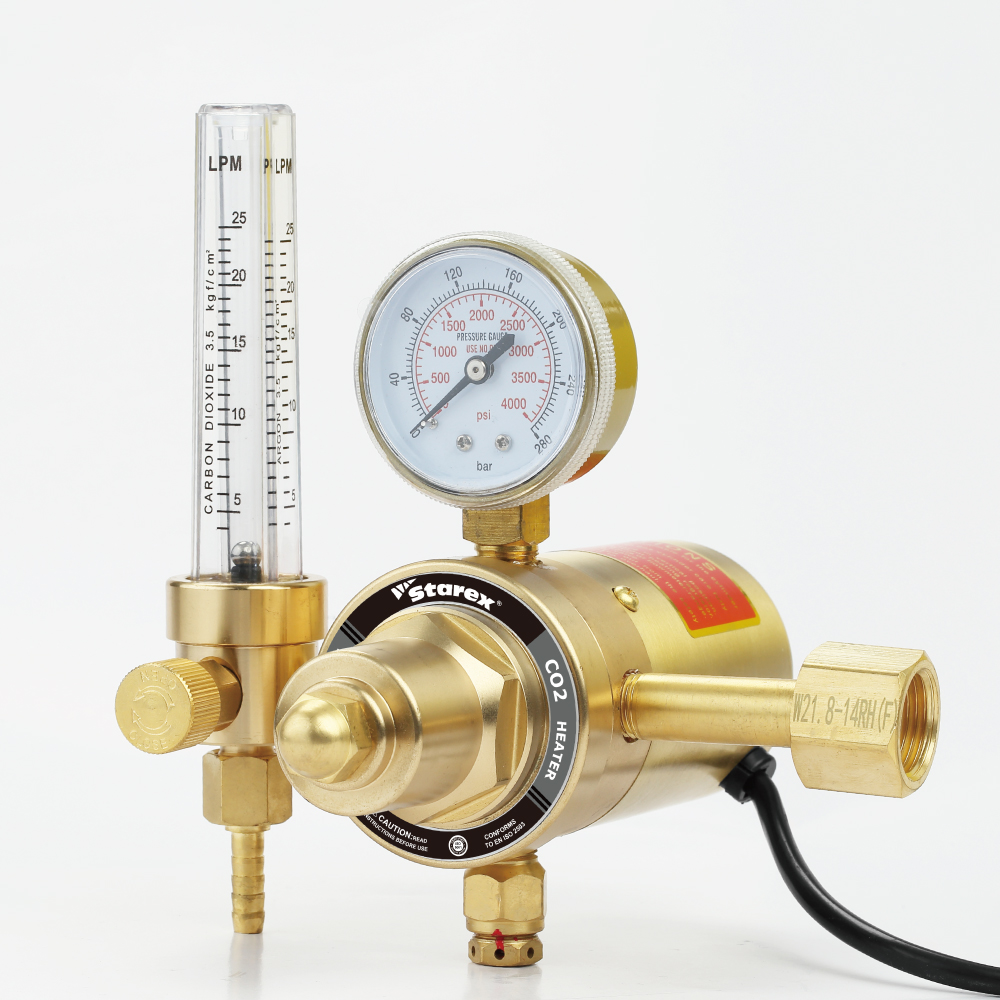
CRF587
STAREX
| Quantity: | |
|---|---|


As a premier manufacturer and dedicated supplier of industrial gas control equipment, we present the CO2 Heater Regulator Flowmeter CRF587, meticulously engineered for high-demand environments. This unit actively prevents gas freezing during continuous operations, ensuring seamless productivity and uncompromising safety for large-scale manufacturing facilities and bulk procurement partners.
Forged all-brass body delivering maximum longevity and impact resistance
Intelligent thermal control system preventing line freeze automatically
High-capacity 3000 Psi maximum inlet pressure tolerance
Precision flow delivery tailored for heavy-duty, continuous applications
The CO2 Heater Regulator Flowmeter CRF587 represents the pinnacle of gas flow management for rigorous industrial applications. When handling high-pressure carbon dioxide, the rapid expansion of gas naturally causes severe temperature drops, often leading to equipment freeze-ups, erratic flow rates, and compromised structural integrity in fabrication processes. This specialized regulator eliminates those operational bottlenecks entirely. Crafted with a dense, weighty all-brass foundation, the unit feels exceptionally robust in hand, reflecting the meticulous engineering designed to withstand harsh shop floor environments. The gleaming metallic finish not only resists corrosive airborne particulates but also houses a sophisticated internal architecture engineered for relentless consistency.
By integrating a high-efficiency cartridge heating element directly into the pressure-reducing mechanism, this device actively conditions the gas before it reaches the delivery line. Operators will notice the quiet, steady hum of reliable gas delivery, completely free from the sputtering or hissing associated with ice accumulation in standard valves. The seamless integration of thermal management and pressure regulation ensures that your fabrication lines maintain optimal parameters shift after shift. Whether deployed in heavy machinery manufacturing, automotive assembly, or specialized fabrication, this regulator transforms unpredictable gas behavior into a strictly controlled, highly predictable asset, ultimately safeguarding your production schedules and output quality.
Understanding the precise technical capabilities of your gas control equipment is crucial for seamless integration into existing operational setups. The following specifications detail the exact performance metrics, power requirements, and operational capacities of the CRF587 series. Each parameter has been rigorously tested to ensure compliance with strict industrial standards, providing facility engineers and technical buyers with the exact data needed for structural planning and equipment upgrades.
| Model | Gas | Flow Range | Heater Power | Max. Inlet Pressure(Psi) |
|---|---|---|---|---|
| CRF587-220 | CO2 | 1-25 | 190W | 3000 |
| CRF587-110 | CO2 | 1-25 | 190W | 3000 |
Equipping your facility with the right control instruments requires a deep understanding of operational advantages. The CRF587 goes beyond basic regulation, offering a suite of features engineered to maximize uptime and enhance precision.
Uncompromising Brass Architecture: The entire housing is machined from premium-grade solid brass. This delivers a reassuringly heavy, dense construction that shrugs off mechanical impacts and aggressive industrial atmospheres, ensuring decades of reliable service.
Autonomous Thermal Regulation: The built-in automatic temperature control system acts as the brain of the unit. By constantly monitoring internal conditions, it guarantees that the gas remains at optimal working temperatures without requiring manual oversight.
Advanced Pressure-Reducing Mechanism: Working in tandem with the cartridge heater, this internal mechanism neutralizes aggressive pressure spikes from full cylinders, translating a violent 3000 Psi inlet force into a smooth, whisper-quiet flow.
Versatile Power Configurations: Available in 36V, 110V, and 220V versions, this unit seamlessly integrates into various global electrical grids and specific machinery power outputs without the need for cumbersome external transformers.
To fully appreciate the value this equipment brings to large-scale operations, it is essential to examine its core engineering dimensions and how they directly resolve common industrial challenges.
The all-brass construction is not merely an aesthetic choice; it is a functional necessity for high-intensity environments. This solid brass framework provides exceptional tensile strength and superior resistance to oxidation and chemical corrosion. For procurement specialists focused on lifecycle costs, this means drastically reduced replacement frequencies and minimal maintenance downtime, even when deployed in humid or chemically aggressive atmospheres.
Carbon dioxide naturally absorbs massive amounts of heat during depressurization, a phenomenon that frequently freezes standard regulators and halts production. This unit directly eliminates this industry-wide bottleneck. The integrated automatic temperature control system operates within a strict, precise window: it initiates heating when the internal temperature drops below 50°C and ceases at exactly 60°C. This constant, invisible thermal balancing ensures unobstructed gas pathways and absolute equipment safety during continuous, high-volume operations.
Precision is the lifeblood of quality manufacturing. The synergistic action between the high-output cartridge heater and the sophisticated pressure-reducing mechanism ensures that even when subjected to extreme maximum inlet pressures of 3000 Psi, the output remains flawlessly stable. Operators receive a highly predictable flow range of 1-25, guaranteeing the exact atmospheric shielding required for flawless execution, eliminating porosity and defects in the final output.
Understanding the diverse infrastructural needs of international manufacturing partners, this device is engineered for universal compatibility. By offering dedicated 36V, 110V, and 220V configurations, the regulator aligns perfectly with various regional power grids and direct machine connections. This adaptability significantly lowers the barrier for global supply chain integration, allowing facility managers to standardize their equipment across international plants.
Safety is never compromised. The robust 190W heating element is governed by a strict thermal cutoff at 60°C, providing a dual-layer safety net. This intelligent over-temperature protection completely eradicates the risks of electrical fires or thermal degradation of internal seals. Facility overseers can deploy these units with absolute confidence, knowing that both the personnel and the surrounding infrastructure are protected against thermal anomalies.
This instrument is explicitly designed for long-term CO2 gas applications. It thrives in high-frequency, heavy-duty environments where continuous gas delivery is non-negotiable. It is the premier choice for MIG/MAG gas-shielded arc processes, heavy machinery fabrication, shipbuilding, and automated robotic assembly lines. Wherever sustained, high-volume carbon dioxide regulation is demanded, this unit delivers unparalleled reliability.
Selecting the right manufacturing partner is just as critical as selecting the right equipment. We provide more than just premium hardware; we deliver comprehensive supply chain security and engineering excellence.
Direct Manufacturer Advantage: By sourcing directly from our advanced production facilities, you bypass intermediary markups. This ensures highly competitive procurement costs while maintaining direct lines of communication for technical support and custom requirements.
Stringent Quality Control: Every single unit undergoes rigorous pressure testing, thermal cycling, and flow calibration before it leaves our facility. We simulate the harshest industrial conditions to guarantee out-of-the-box performance.
Scalable Production Capacity: Whether outfitting a single specialized workshop or supplying an entire multinational manufacturing network, our scalable production lines ensure timely fulfillment of volume orders without compromising on meticulous craftsmanship.
Dedicated Technical Expertise: Our engineering teams possess deep, practical knowledge of industrial gas dynamics. We provide comprehensive guidance on integration, ensuring that the equipment you procure perfectly matches your specific operational demands.
Below are some of the most common technical inquiries we receive from facility engineers and procurement directors regarding the CRF587 series.
This specific temperature bracket is mathematically optimized for carbon dioxide depressurization. By activating below 50°C, it preemptively stops ice crystal formation before it begins. Shutting off at 60°C prevents the degradation of internal synthetic seals and avoids unnecessary electrical draw, ensuring a perfect balance of safety, energy efficiency, and uninterrupted gas flow.
Yes. The robust all-brass architecture and the heavy-duty pressure-reducing mechanism are explicitly engineered to safely process maximum inlet pressures up to 3000 Psi. It safely steps down this massive force into a highly manageable and precise 1-25 flow range internally, eliminating the need for external pre-regulators.
The internal cartridge heater applies thermal energy directly to the core of the pressure-reducing mechanism where the gas expansion, and subsequent temperature drop, actually occurs. This direct internal heat transfer is vastly more efficient and responsive than external bands, which lose heat to the ambient environment and react too slowly to rapid internal freezing.
No, each unit is specifically wound and configured at the factory for its designated voltage to ensure maximum electrical safety and heating efficiency. Procurement teams must specify the required voltage based on their facility's grid or the specific power output of their machinery to ensure proper integration.
The solid brass body significantly extends the operational lifespan of the unit by resisting both external environmental corrosion and internal wear from high-pressure gas friction. In most industrial settings, this translates to drastically extended maintenance intervals, requiring only periodic visual inspections and routine leak checks rather than frequent component replacements.


